Q. Dorayaki Dessert: Why Your Custom Filling Fails Without Confectionery Architecture
This article is a specialized design guide supporting our foundational pillar: Q. What Defines Dorayaki? The Art of Harmony Between Anko and Cake.
Introduction: Dorayaki is Not a Sweet. It is a Dessert Format.
Modern pastry chefs and menu developers in culinary capitals like New York are constantly seeking to build inclusive, sensory-rich plated desserts. Many of these chefs look to traditional Japanese Wagashi—specifically dorayaki—for its fat-free, water-based, and plant-forward qualities. But most Western operators treat dorayaki merely as a casual, pre-packaged Japanese street snack, copying simple pancake recipes from the internet and lazily stuffing them with their own house chocolate ganache, fruit confiture, or hazelnut praline. This basic, plug-and-play approach almost always results in a structural and sensory failure: soggy skins, rubbery textures, and fillings that squish out from the sides on the first fork-strike. Therefore, to elevate dorayaki into a sophisticated, $12+ plated restaurant dessert, you must stop treating it as a static “recipe.” You must redefine it as a highly scientific dessert format—a structural platform akin to the tart, the macaron, or the eclair.
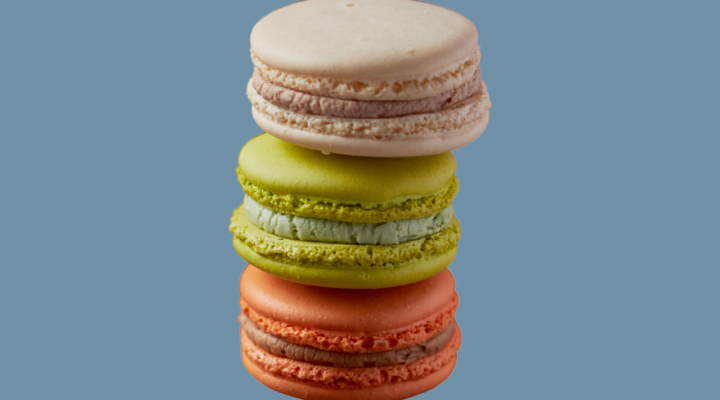
A macaron is not defined by its almond meringue alone, but by the physical harmony between the shell’s moisture barrier and the filling’s water activity. Similarly, a true dorayaki dessert is a thermodynamic interface.
When you attempt to marry Western fillings with Japanese cake shells without understanding the molecular physics of the interface, your dessert self-destructs.
To bridge this gap, we must break down the 10 physical and thermodynamic variables that govern the dorayaki format, contrasting the common mistakes of high-end pastry chefs with the elegant structural solutions of authentic Japanese Wagashi engineering.
The 10 Physical Variables of the Dorayaki Format
1. Pancake Thickness (The Air-Bubble Scaffold)
- The Chef’s Failure: Western chefs often cook thick, fluffy American-style breakfast pancakes, assuming thickness equals luxury. Under the weight of a dense chocolate ganache or fruit cream, these thick, heavy skins absorb the filling’s moisture unevenly, resulting in a dense, bready mass that overwhelms the palate.
- The Wagashi Science: Authentic dorayaki skins are engineered to a precise thickness of 8mm to 10mm. By controlling the specific gravity of the batter through precise whipping of egg proteins and the addition of honey, we create a highly stable, micro-cellular scaffold. This thin yet resilient shell yields effortlessly to a fork without collapsing, maintaining a perfect 1:1 thickness ratio with the filling.
2. Softness (The Shear-Yield Elasticity)
- The Chef’s Failure: To ensure a plated dessert holds its shape, chefs often build firm, structure-heavy cakes. However, when a diner attempts to cut a firm-shelled dorayaki with a fork or dessert spoon, the sheer force compresses the soft filling, causing it to aggressively squish out the sides and ruin the plate presentation.
- The Wagashi Science: Dorayaki skins possess a unique elastic softness called elastic yield. By balancing gluten development (using soft pastry flour and minimal mixing) with the tenderizing effects of sugar, the baked shell behaves like a soft sponge that shears instantly under a spoon, cleanly cutting through both skin and filling in one vertical motion.
3. Moisture (The Hydrogen-Bond Barrier)
- The Chef’s Failure: To combat dry cake skins, Western chefs immediately reach for lipids—adding butter, egg yolks, or heavy cream to the batter. In a dorayaki format, these lipids coat the flour starch, preventing the skin from binding with the filling’s moisture, causing the shell to slide off the filling entirely.
- The Wagashi Science: Dorayaki skins are completely fat-free. They achieve their legendary moisture and long-lasting softness through hygroscopic hydrogen bonding. High concentrations of sugar, organic honey, and traditional mirin act as natural humectants, holding water molecules tightly within the gelatinized starch network. This prevents dry staling (retrogradation) without relying on a single gram of expensive dairy fat.
4. Sweetness (The Osmotic Equilibrium)
- The Chef’s Failure: Chefs often use a low-sugar pancake recipe to compensate for a highly sweetened Western filling (like caramel or ganache). This creates a massive osmotic imbalance: moisture rapidly migrates from the wet, low-sugar pancake skin into the high-sugar filling, turning the skin dry and rubbery within hours while liquefying the filling.
- The Wagashi Science: Dorayaki is a system of balanced water activity ($a_w$). The sugar concentration (Brix) of the cake shell must be scientifically calibrated to match the osmotic pressure of the filling. By establishing osmotic equilibrium, water molecules remain locked in place, preserving the moist crumb of the shell and the stable viscosity of the core.
5. Anko Particle Texture (The Structural Moisture Shield)
- The Chef’s Failure: When replacing traditional red bean paste (Anko) with a smooth Western cream or confiture, pastry chefs find that the liquid rapidly migrates into the cake shell, turning it into a soggy, wet mush. They struggle to find a physical barrier to halt this moisture transition.
- The Wagashi Science: Traditional Tsubuan (chunky red bean paste) is not just a sweet filling; it is a structural marvel. Cooked adzuki starches are locked inside highly resilient, microscopic plant cell walls called anko particles. These particles act as physical sponges that trap sugar syrup and water tightly inside their cellular membranes, preventing any moisture from escaping into the cake shell. Understanding how these anko particles act as a “moisture shield” is essential before you attempt to formulate alternative fillings.
6. Shell-to-Filling Weight Balance (The Culinary Golden Ratio)
- The Chef’s Failure: Pastry chefs, eager to show off high-value ingredients, often over-stuff their dorayaki with massive mounds of chocolate mousse or fruit curd, throwing off the weight balance. The excessive filling coats the palate, making the dessert feel cloying and heavy after two bites.
- The Wagashi Science: The authentic dorayaki format is governed by a strict 1:1 to 1.2 weight ratio of shell-to-filling. This ensures that with every single bite, the amount of moist, carbohydrate-rich cake is perfectly proportioned to absorb and balance the sweet, moisture-rich filling, leaving the palate clean and ready for the next forkful.
7. Temperature Dynamics (Thermodynamic Contrast)
- The Chef’s Failure: Restaurants often serve pre-assembled, chilled dorayaki directly from the walk-in refrigerator. This cold temperature hardens the cake starches, silences the aromatics of the honey and mirin, and makes the dessert feel cold, stiff, and uninspiring.
- The Wagashi Science: The pinnacle of a plated dorayaki dessert is its thermal contrast. The cake shells are freshly baked on a heavy copper griddle (Hiranabe) and plated warm—releasing the sweet, toasted aromas of the Maillard reaction. This warm shell is served immediately with a cold contrast, such as a scoop of high-acid citrus sorbet or premium matcha gelato. The thermodynamic melting of the cold element against the warm, plush griddle cake is what justifies a $12+ menu price.
8. Mouthfeel Integration (Synchronized Dissolution)
- The Chef’s Failure: A chef sandwiches a rich hazelnut praline inside a pancake. As the diner chews, the highly soluble pancake skin dissolves instantly in saliva, leaving behind a thick, sticky clump of oily praline stuck to the roof of the mouth. The elements do not eat as one coherent dessert.
- The Wagashi Science: A masterfully engineered dorayaki utilizes synchronized dissolution. The rate at which the cake starch breaks down under salivary amylase must perfectly match the rate at which the filling melts at body temperature. By aligning these physical properties, the shell and the filling liquefy simultaneously, sliding down the throat in perfect harmony without leaving any heavy residue behind.
9. Coloration (The Maillard Uniformity)
- The Chef’s Failure: Cooking pancakes on a standard commercial griddle often yields a mottled, spotted, or unevenly browned surface. This rustic, breakfast-like appearance fails to project the refined elegance required of a premium, Michelin-standard dessert plate.
- The Wagashi Science: Authentic dorayaki skins boast a flawless, uniform, golden-amber surface with zero spots. This is achieved by combining specific reducing sugars (honey and mirin) to drive an even Maillard reaction, and baking on a thick, seasoned copper plate (Hiranabe) that conducts heat with absolute, microscopic uniformity.
10. Aromatic Profile (The Masking Interface)
- The Chef’s Failure: When formulating a dairy-free filling, chefs often struggle with the “flatness” of plant-based milks, or the grassy notes of alternative proteins. They try to mask these off-flavors by adding synthetic vanilla or heavy industrial flavorings.
- The Wagashi Science: The traditional dorayaki skin is an aromatic powerhouse. The combination of caramelized honey, the toasted amino acids of whole eggs, and the high-pitched esters of genuine brewed mirin and micro-dosed soy sauce creates a complex olfactory canopy. This natural, deeply savory aroma masks the earthy notes of plant-based proteins, providing a clean, elegant, and highly satisfying aromatic finish.
Integrating Your Signature Custard Excited to pair your own delicate custard or pastry cream with the dorayaki format? Discover how aligning your creative passion with traditional structural science keeps your shells soft and your creams pristine: Dorayaki Recipe Custard: Aligning Your Pastry Passion with Traditional Structural Science
The DOS Creed: You Cannot Innovate What You Do Not Understand
To Western pastry chefs who want to create their own “fusion” desserts, the lesson is clear: you cannot bypass the foundational architecture of Wagashi.
If you do not master how traditional Japanese masters balance these 10 physical variables using pure sugar chemistry, egg emulsification, and starch gelatinization, your modern variations will remain clumsy, structurally unstable replicas.
When you understand the exact physical chemistry of why a traditional dorayaki feels so unified, you unlock the keys to the entire format. You can then confidently swap traditional Anko for a house-made coffee-infused ganache, a vegan passionfruit curd, or a whiskey-infused chestnut cream, knowing exactly how to adjust your batter’s water activity and griddle thermodynamics to prevent structural collapse.
This is the core mission of the Dorayaki Online School (DOS). We do not teach you static, unalterable recipes. We give you the underlying scientific framework to dominate the dorayaki dessert format in your own professional kitchen.
Build Your Signature Menu Masterpiece
Stop compromising your culinary vision with rustic, unstable copies. Transition to systematic, science-backed menu engineering:
- Step 1: Master the Technical Blueprint (Online Bundle): Acquire the precise molecular formulas of our 100% dairy-free, zero-fat sponge, and learn the fluid dynamics of egg-sugar emulsification with The Dorayaki Professional Mastery Path Bundle.
- Step 2: Co-Develop Your Custom Plate (3-Day Tokyo Live Schooling): Once your scientific foundation is secure, join us live for our elite, private 3-Day Live Schooling in Tokyo at Wagashi Labo Ichiyo. Bring your restaurant’s unique kitchen components—your proprietary ganaches, local fruit purees, or signature spirits—as your “homework”. Work face-to-face with Master Yoko Senoo to scientifically troubleshoot, calibrate, and standardize your custom recipe, ensuring it satisfies all 10 physical variables and runs flawlessly on your dinner service line.
The Dorayaki Quality Design Series
Build an uncompromised command of authentic Wagashi engineering. Explore our complete professional knowledge series to master the foundational design laws of Japanese confectionery:
- Pillar Essay: Q. What Defines Dorayaki? The Art of Harmony Between Anko and Cake
- Quality Guide: Q. What Makes Anko Essential to Dorayaki?
- Market Strategy: Q. Could Anko Be the Next Plant-Based Dessert Ingredient?
- Gluten-Free Analysis: Q. Why Don’t Traditional Japanese Wagashi Shops Sell Gluten-Free Dorayaki?
- Texture Design: Q. How Is Dorayaki’s Signature Texture Designed?
- Vegan Strategy: Q. Can Dorayaki Introduce Customers to Vegan Wagashi?
- Pillar Page: Q. Can Sugar Be Replaced in Authentic Dorayaki Recipes?
- Troubleshooting Guide: Q. Why Your Custom Dorayaki Filling Fails (And How to Fix It)
- Compliance Guide: Q. How to Craft Truly Halal-Compliant Dorayaki: The Hidden Alcohol Trap in Traditional Recipes
- Healthy Dessert Science: Q. Healthy Dessert Science: How Azuki Redefines “Guilt-Free” Luxury for US Diners
- Nutrition Analysis: The Truth About Dorayaki Calories: A Chef’s Guide to Fat-Free, Nutrient-Dense Dessert Design
- Tokyo Confectionery R&D: Dorayaki Tokyo: Why Elite Pastry Chefs Must Study “The Context of the Plate” in Tokyo’s Confectionery Scene
- Brand Design R&D: Dorayaki 7/11 vs. Chef-Designed: Why Your Restaurant Confection Doesn’t Have to Taste Like a Convenience Store Classic
- Metropolitan Whitespace: Dorayaki London: What New York Chefs Can Learn from London’s Wagashi Whitespace
- Financial & ROI Strategy: Dorayaki Profit Margin: Why Your Restaurant is Losing Money on Traditional Western Desserts
- High-Profit Dessert Ideas: High-Profit Dessert Menu Ideas: How to Fight Butter Inflation with Smart Pastry Architecture
- Dessert Format Design: Dorayaki Dessert: Why Your Custom Filling Fails Without Confectionery Architecture