Q. What Defines Dorayaki? The Art of Harmony Between Anko and Cake
Part 1: A Misread Icon — The Cost of Underestimating Dorayaki
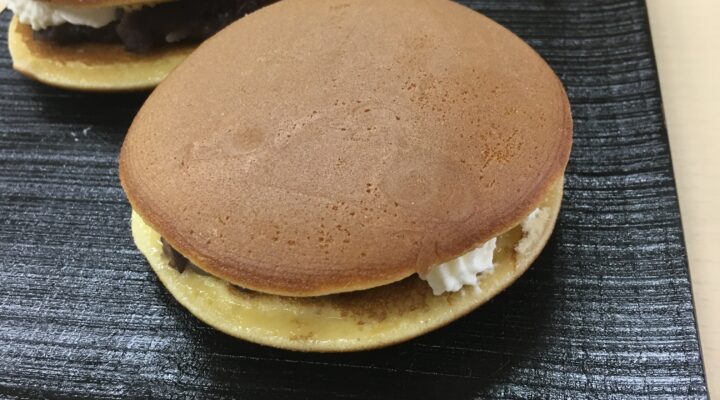
In professional kitchens across New York, Dorayaki is routinely misclassified. Two honey-infused pancakes, a layer of bean paste — the visual read is immediate, and for a Western culinary eye trained on architectural tarts, laminated viennoiserie, and multi-component plated desserts, the conclusion is equally immediate: street food, casual format, limited ceiling. That misclassification is a commercial error with a measurable cost.
Dorayaki is not a pancake sandwich.
It is a precision-engineered confection in which every structural variable — surface tension, sugar differential, moisture migration rate, aroma architecture — is calibrated under a single governing principle: the outer cake exists solely in service of the filling. But that principle is not a stylistic preference; it is a design philosophy with centuries of technical refinement behind it, and it produces a sensory outcome — a melt-in-the-mouth cohesion between two components that dissolve simultaneously on the palate — that no approximation of the format will replicate. Therefore, for a pastry director building a differentiated dessert program in a market as competitive as New York, the question is not whether Dorayaki belongs on the menu. The question is whether your team understands it deeply enough to execute it at the level the format demands.
The Business of Freshness Worrying about short shelf-life and food waste in your takeout program? True luxury dorayaki embraces a 1-to-2-day freshness window to secure maximum premium value and eliminate artificial preservation costs: Dorayaki Snack: Why Freshness is the Ultimate Luxury for Your Grab-and-Go Dessert
Part 2: The Five Laws of Artisanal Harmony
The flawless integration that defines a premium Dorayaki is not the product of a good recipe. It is the product of absolute command over five interlocking technical principles — each of which runs counter to the assumptions embedded in Western pastry training.
1. Differential Sugar Architecture
Western baking tends toward tonal consistency: cake and filling operate within a shared sweetness register, producing a unified but ultimately one-dimensional flavor profile. Authentic Dorayaki rejects this entirely. The filling is deliberately formulated at a high brix level, asserting the bean’s dominant sweetness. The cake skin, by contrast, is held at a strictly restrained sugar level — low enough that it recedes behind the paste rather than competing with it. This differential is not a matter of preference; it is a structural requirement. Without it, the combined sweetness load exhausts the palate within two bites, and the nuanced aromatic finish of the Azuki bean — which is the point of the entire exercise — never registers. But when the differential is calibrated correctly, the cake’s restraint draws the bean’s complexity forward, and the eating experience deepens rather than flattens across the bite.
2. The San-Do-Wari Hydration Principle
The velvet, yielding texture of a professional Dorayaki skin is produced by a traditional formulation system known as San-Do-Wari — Three Equal Parts — in which sugar is introduced at 100% of the pastry flour’s weight. At that ratio, dissolved sugar molecules bind free water within the starch matrix during baking, producing a crumb that resists staling, maintains structural softness over an extended display window, and achieves a melt-in-the-mouth quality without the inclusion of dairy fat. This is not an approximation of what butter does; it is a fundamentally different mechanism for achieving moisture retention — one that predates the modern plant-based movement by several centuries and operates at a level of technical elegance that synthetic emulsifiers cannot reach.
The Science of Batter Consistency : Struggling with batter degradation during busy dinner service? Master the traditional “Anbai-tori” technique to dynamically calibrate viscosity and ensure predictable shells every run: Dorayaki Batter: How to Maintain Predictable Viscosity Throughout a Busy Dinner Service
3. Viscosity and Cuticle Synchronization
The defining failure of an under-engineered Dorayaki is palatal separation: the cake dissolves immediately, leaving a dense, gritty mass of paste behind. Eliminating that failure requires that the filling’s viscosity be engineered to match the cake’s elasticity precisely — so that both components dissolve at the same rate and arrive on the palate as a single, integrated texture. If the paste is too rigid, it tears the sponge. If it is too fluid, moisture migrates ahead of schedule, and the skin collapses before service. Furthermore, in a premium chunky paste (Tsubuan), the individual bean cuticles must be handled with exact thermal control: interior starches cooked to a silky finish, outer skins intact and unruptured — a standard that requires both diagnostic judgment and repetition to hold at volume.
4. The Micro-Flavor Bridge
Dorayaki does not operate on the sensory logic of Western pastry, where dominant aromatic signatures — bitter cacao, sharp lemon acid, heavy vanilla — are used to define the product’s identity. Its aromatic architecture is quieter and more precise: a calibrated harmony of delicate fragrance notes designed to dissolve the sensory boundary between cake and filling rather than assert a single dominant flavor. This is achieved by replacing a specific fraction of sucrose with Mirin and premium honey. The fermented Mirin introduces trace amino acids and subtle salinity — a savory background register that functions as a molecular bridge between the baked flour skin and the earthy bean paste. The natural fructose in the honey adds a clean aromatic lift that prevents the high-brix filling from reading as heavy. Together, these ratios produce a flavor depth that is immediately perceptible on the palate but difficult to locate analytically — which is precisely where elite shops establish their proprietary identity.
5. The Sovereign Design Principle: Anko as Protagonist
In a premium macaron, shell and ganache operate as equal culinary partners. In a classic éclair, choux and cream share structural equivalence. Dorayaki rejects that parity entirely. The cake is the vessel — structurally subservient, engineered to yield. The Anko is the protagonist — the absolute center around which every other variable is calibrated. This is not a metaphor; it is a design specification. And it must be internalized before any menu innovation — seasonal flavor integration, cream additions, fusion formats — can be executed without compromising the pastry’s fundamental coherence.
Part 3: The Three Walls That Stop Commercial Replication
Armed with a standardized formula, international pastry teams consistently encounter the same three operational failures — each rooted not in technical deficiency but in a misunderstanding of the design philosophy above.
The Static Recipe Fallacy
A recipe is a baseline, not a blueprint. Azuki beans are a living agricultural commodity: starch density and moisture absorption shift with harvest year, origin, and storage conditions. A master artisan reads batter viscosity dynamically, adjusting hydration against daily atmospheric humidity and griddle thermal load. A 30-second deviation in the sugar-reduction phase is sufficient to move the paste outside the Toro-tto viscosity window — the slightly fluid, glossy finish that initiates moisture migration and makes temporal completion possible. But no recipe card encodes that adjustment. It is a diagnostic skill, and it requires supervised repetition to develop.
The Filling Fallacy
Western kitchen operations treat internal fillings as static flavor inserts — isolated components that are prepared independently and assembled without further consideration. Approaching Anko with that framework produces a Dorayaki that is technically assembled but culinarily incomplete. A freshly assembled Dorayaki is not finished; it is in process. The masterpiece arrives hours later, as moisture and sugar migrate from the paste into the skin — softening it, unifying the two components, and producing the silk-like mouthfeel that defines the format at its best. Missing that window — either by serving too early or by formulating a paste that never initiates migration — means the product never reaches the sensory standard the format is capable of.
The Equilibrium Fallacy
When expanding into fusion profiles — raspberry confit, Yuzu, chocolate, dairy cream — the Western instinct is to amplify: more acid, more lipid, more aromatic impact. In a Dorayaki structure, that instinct is counterproductive. The accent flavor’s function is not to dominate; it is to frame, elevate, and highlight the central bean profile. When a seasonal element overpowers the Azuki’s aromatic finish, the pastry loses its Japanese identity and becomes an expensive pancake with an unusual filling. Therefore, the art of modern Dorayaki innovation is not addition — it is calibration: understanding precisely how much of a Western ingredient the structure can absorb before the bean’s voice disappears.
The Science of the Dessert Interface : Adapting the dorayaki format for custom fillings like ganache? Learn to control the molecular variables that prevent structural collapse and synchronize mouthfeel dissolution: Dorayaki Dessert: Why Your Custom Filling Fails Without Confectionery Architecture
The Zen of Griddle Mastery : Baking perfect shells without relying on digital timers or thermometers? Learn the physical movements, visual events, and ladling strokes used by Tokyo’s top bakers: Dorayaki Top Baker: How to Master the Griddle Without Numerical Calculators
Master the Baseline Before Fusion : Western pastry relies on fats to lock in moisture, but authentic dorayaki achieves perfection through pure, fat-free wagashi physics. Before attempting to design hybrid pastries, you must master the traditional baseline to prevent structural collapse. Read: Dorayaki Pastry: Why You Must Master Pure Wagashi Physics Before Attempting Fusion
Part 4: The Mastery Roadmap
The greatest challenge in building an elite Wagashi program is not sourcing the right beans or acquiring the right equipment. It is learning to think about Dorayaki on its own terms — as a design system governed by a specific philosophy, not as a format to be approximated with familiar techniques. And that cognitive shift requires structured, sequential training.
Step 1: The Dorayaki Professional Mastery Path Bundle
The online curriculum establishes the technical foundation: San-Do-Wari sugar hydration, oil-free surface management, bean-paste viscosity calibration — all executable within your current kitchen using your existing equipment. We expect professional students to complete a minimum of 100 independent practice cycles before advancing. That threshold is not arbitrary; it is the repetition volume required to internalize the fluid behavior of the dough and develop reliable diagnostic judgment on batter consistency and paste finish.
Step 2: The 3-Day Intensive Live Schooling in Tokyo
The live residency is not an introduction. It is a final audit — the point at which your independent practice is evaluated against the live sensory standard by master Wagashi chefs working in direct, hands-on supervision. Here you will calibrate the visual cue of the Toro-tto finish in person, refine the hand adjustments that no video can transmit, and receive expert verification that your product has reached a standard your New York market will recognize as exceptional. The result is not a certificate. It is operational certainty: the confidence to launch a menu line knowing that your foundational technique will hold under service pressure.
Master the philosophy. Then execute without compromise.
[Explore The Dorayaki Professional Mastery Path Bundle & Secure Your Tokyo Schooling Spot →]
Expand Your Menu Strategy
The Core Philosophy Behind Every Seasonal Innovation Before you finalize your strawberry, yuzu, or chocolate variations, you must master the underlying architectural blueprint of Wagashi. Discover why authentic Dorayaki is never a “pancake sandwich,” but an intricately engineered ecosystem where the cake is strictly the vessel, and the bean paste is the absolute protagonist.
Read Our Core Master Guide: What Makes Anko Essential to Dorayaki?
The Next Frontier in Premium Plant-Based Desserts Stop relying on processed fats and laboratory-engineered substitutes. Discover an authentic, clean-label Japanese dessert tradition that never needed to imitate dairy in the first place. Learn how Anko functions as a standalone flavor asset and why Dorayaki is your perfect gateway to capture the luxury wellness market.
Read the Strategic Guide: Could Anko Be the Next Plant-Based Dessert Ingredient?
Ready to transform this traditional foundation into a highly profitable, year-round revenue loop? Discover our expert culinary engineering guides to master advanced seasonal flavor deployment:
🌸 SPRING SERIES
- The Molecular Art of Raspberry & White Bean Confit — Learn to control water migration using concentrated spring fruits.
☀️ SUMMER SERIES
- Capturing the Pure Floral Essence of Japanese Yuzu — Master the balance of volatile citrus oils without deflating your dough.
- The Science of the Perfect Dorayaki Ice Cream Combination — How to pair dairy with Anko to survive immediate melting-point drops.
🍂 AUTUMN SERIES
- Designing Heavy Textures with Chestnut & Layered Mochi — Capitalize on New York’s holiday demand using trending chewy textures.
❄️ WINTER SERIES
- Balancing Bitter Cacao Densities for High-Margin Chocolate Fusion — How to blend premium cocoa without drying out the sponge crumb.
- The Philosophy of Nama-Dora: Engineering the Ultimate Cream Marriage — Discover how fat levels round out bean particles for a velvet finish.
Deepen Your Expertise: Designing the Perfect Timeline Authentic dorayaki relies on perfect harmony between the cake and the anko. But when exactly does that harmony reach its absolute peak? The answer depends entirely on your business model. Whether you serve it immediately as a plated dessert or package it for luxury takeout, your recipe must be calibrated for your specific operational timeline. Learn why there is no “one-size-fits-all” expiration date, and discover how to design your ideal shelf life starting with the product you want to create: [Business Strategy & Product Design] Q. What Should Your Dorayaki Expiration Date Be? Start With the Product You Want to Create
- San-Do-Wari Baseline : Q. Dorayaki Original Recipe: Mastering the Classic “San-Do-Wari” Before Seeking Custom Variations
- Wagashi Training ROI Analysis: What Is the Real Cost of Wagashi Mastery? A Cold ROI Analysis for Western Pastry Chefs
- Online vs Tokyo Validation: Online Convenience vs. Tokyo Validation: Why a Hybrid Pathway Is the Only Rational Investment for Pastry Chefs