Q. What Makes Anko Essential to Dorayaki?
In Western pastry, the filling serves the vessel. The tart shell, the choux, the cheesecake base — these are the structural protagonists, and the filling exists to complement them. Dorayaki inverts that logic entirely: the honey-infused pancake skins exist solely as a stage, and Anko is the performance. And for a New York pastry program serious about building a differentiated Wagashi menu, understanding that inversion is not a cultural footnote — it is the foundational design principle from which every technical decision follows. Anko for Dorayaki is not a generic filling to be sourced, approximated, or substituted. It is a precision-engineered component built around five architectural principles that have no direct equivalent in Western confectionery.
The first principle is protagonism. In Japanese confectionery, the Anko is the dish. The pancake skin’s sweetness, moisture content, and texture are calibrated entirely in service of the bean paste — not the other way around.
The second is aromatic complexity. The Western descriptor “sweet bean paste” is technically accurate but culinarily misleading: the goal of a master-level Anko is not sweetness but the preservation of the Azuki bean’s natural flavor profile — its layered legume aroma, subtle earthiness, and a finish with the quiet resonance of roasted nuts. Sweetness is the vehicle; the bean is the destination.
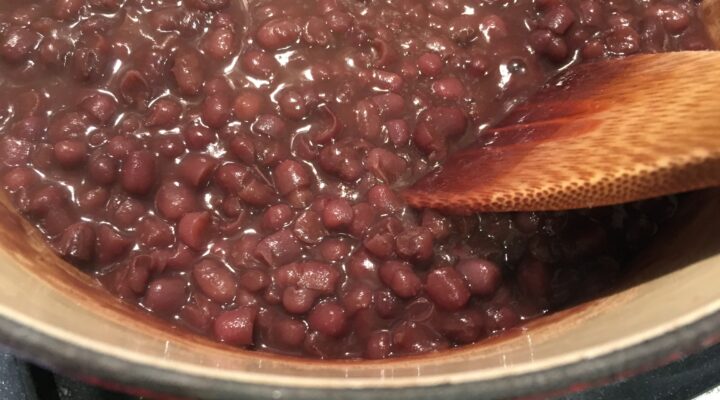
The third principle is pastry-specific formulation. In Japan, Anko is never a universal paste applied across formats — it is reinvented for each individual confection. Daifuku requires a low-moisture paste so the surrounding Gyuhi does not absorb water and turn tacky. Monaka demands an extremely dry filling to preserve the outer shell’s crispness. Dorayaki, by contrast, requires a slightly fluid, glossy texture — what Japanese confectioners call Toro-tto — engineered specifically to flow onto the palate and initiate moisture migration into the skin over time.
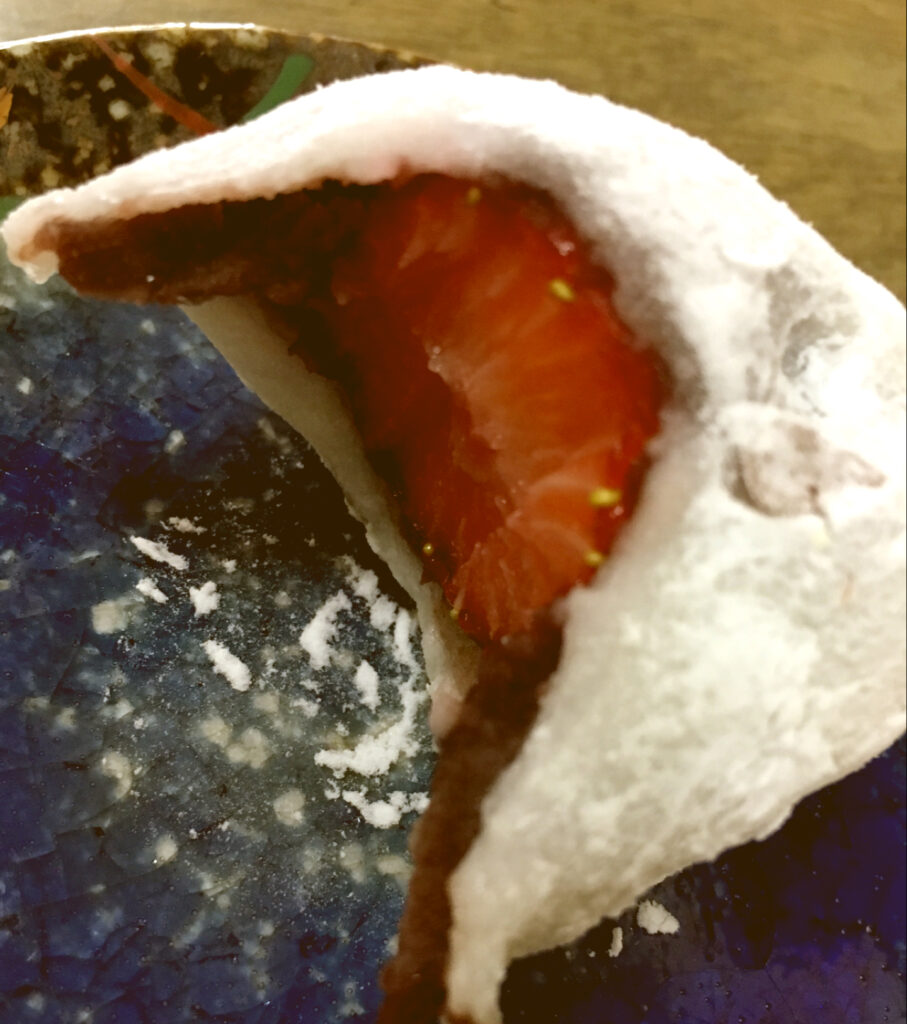
The fourth principle is seasonal extensibility. Anko is not only a filling; it is a flavor development platform. Shiroan’s clean, mild sweetness pairs with high-acidity profiles — raspberry confit, Yuzu, lemon — while Tsubuan’s robust earthiness anchors richer pairings: chocolate, vanilla, Hojicha, chestnut. Every seasonal variation in a four-season Dorayaki menu is, structurally, a function of Anko.
The fifth principle is temporal completion. A Dorayaki is not finished the moment the skins and paste are assembled. It completes itself over hours, as moisture and sugar migrate from the Anko into the pancake skin — softening it, unifying the two components, and producing a melt-in-the-mouth cohesion that neither element possesses independently. This concept — that a dessert’s peak is not immediate but achieved through resting — has no real parallel in Western pastry culture, and for a New York chef encountering it for the first time, it reframes the entire production and display timeline.
The failure mode for self-taught chefs approaching Dorayaki is consistent and predictable. The Dorayaki skin is engineered to receive moisture from the Anko over time — a passive, chemistry-driven process that produces the unified texture described above. But chefs who source a generic bean paste recipe, cook it to standard consistency, and sandwich it between a commercial pancake produce a product that is dense, dry, and structurally disconnected: the paste sits inert between two sponge layers, moisture migration never initiates, and the result registers as gritty and unfinished on the palate. The failure is not in the execution — it is in the premise. A paste formulated without the specific Toro-tto viscosity required for Dorayaki will never bond with the skin regardless of how carefully the pancake is made. Therefore, the technical entry point for a professional Dorayaki program is not the batter — it is the Anko, and specifically the ability to hit and recognize the precise viscosity window that makes temporal completion possible.
Deepen Your Expertise: The Nutritional Power of Anko
You now understand the textural and flavor mastery behind authentic Anko. But what about its biological value? Beyond its flawless mouthfeel, Anko is a clean-label superfood that can drastically elevate your menu’s value. Discover the staggering scientific data—from anti-aging polyphenols to gut-friendly fiber—that transforms this core ingredient into a high-margin functional dessert: [Functional Dessert Strategy] Q. Beyond Sweetness: How Azuki Nutrition Transforms Dorayaki into a High-Margin Functional Dessert
Building a Dorayaki program that holds to production standard — across formats, seasons, and volume — requires internalizing the Anko’s role not as a filling to be prepared but as a design system to be mastered, and The Dorayaki Professional Mastery Path Bundle provides the structured digital curriculum to do exactly that: bean manipulation, sugar hydration, and viscosity calibration, executable within your current kitchen setup at your own pace. But the Toro-tto finish — that precise moment of glossy fluidity that initiates the moisture migration responsible for Dorayaki’s defining texture — is a sensory target that must be seen, touched, and tasted in person to be reliably reproduced. Therefore, the definitive step is the 3-Day Intensive Live Schooling in Tokyo: a hands-on residency under master Wagashi chefs where you will calibrate your Anko viscosity against the live standard, experience the fully aged texture of a properly rested Dorayaki firsthand, and leave with the sensory reference points needed to build and sustain a four-season menu that your New York guests will not encounter anywhere else.
Understand the philosophy. Then master the craft.
[Explore The Dorayaki Professional Mastery Path Bundle & Tokyo Live Schooling →]
Wagashi Training ROI Analysis: What Is the Real Cost of Wagashi Mastery? A Cold ROI Analysis for Western Pastry Chefs