
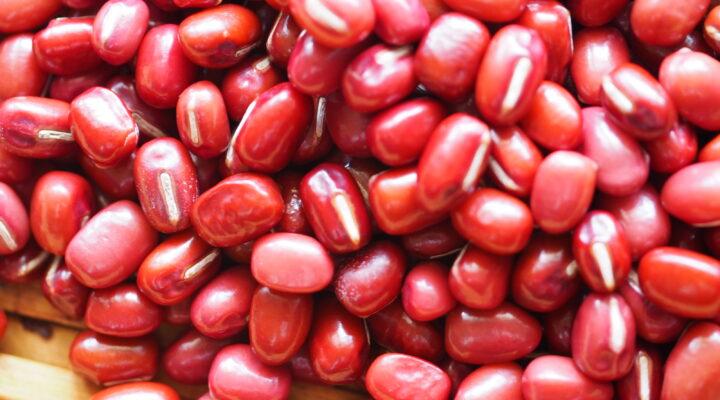
Q. Beyond Sweetness: How Azuki Nutrition Transforms Dorayaki into a High-Margin Functional Dessert
The wellness market has moved past simple indulgence. Your most valuable customers will pay a premium for a dessert that does something for them — and you already know this, which is why you’ve been testing plant-based and dairy-free formulas. But aquafaba and heavy plant oils keep landing you in the same place: a dense texture, an off aftertaste, and — the bigger problem — no real story to tell. You can make a vegan dessert. What you’re missing is the data that lets you charge for it.
That data already exists, sitting inside the one ingredient at the center of traditional Dorayaki: Azuki. The numbers are not modest. They are the kind of numbers that justify a menu price, not just a health claim — and once you see them, “sweet bean paste” stops being an adequate description of what you’re actually selling.
The Anatomy of a Superfood
1. The Beauty Dessert — Anti-Aging and Cellular Regeneration
When you put Dorayaki in front of a wellness-conscious guest, you are not serving a vegan pastry. You are serving an edible beauty treatment, and the number backs it up: 100 grams of Azuki carries 300 to 600 mg of polyphenols — 1.5 to 2 times the antioxidant load of a glass of red wine. Add in Azuki’s B2 and B6, both essential to the cell regeneration that keeps skin, hair, and nails visibly healthy, and you have a dessert that reads as skincare on a menu.
2. The Recovery Snack — Iron, Potassium, and Sustained Energy
Azuki can credibly replace the energy bar on a menu built for professionals and fitness-focused guests. 100 grams delivers 5.4 mg of iron — 2.7 times more than spinach, the vegetable most people already assume is the benchmark. It carries 460 mg of potassium, on par with a banana, supporting sodium balance and reducing bloat. And its Vitamin B1 content supports the conversion of carbohydrate into usable energy rather than fatigue. In Japan, that profile is taken seriously enough that Azuki-based products are standard fuel among cyclists, marathoners, and mountaineers — not a wellness trend, a performance one.
3. The Gut Health Architect — Resistant Starch and Expanding Fiber
Gut health is the trend every wellness menu is chasing, and Azuki has a mechanism most ingredients can only claim marketing adjacency to. Its insoluble fiber expands by 50% when boiled, activating digestion and producing genuine fullness without the calorie load. More significant: the boiling process converts a meaningful share of the bean’s starch into resistant starch — starch your digestive enzymes largely can’t break down, which means it isn’t converted into calories, and which actively helps lower cholesterol. This is not a “feels healthy” claim. It’s a mechanism you can put in writing on a menu description.
Conclusion: You Now Have the Numbers. You Still Need the Craft.
Iron ahead of spinach. Polyphenols ahead of red wine. A starch that resists digestion instead of adding to it. Azuki is, by the numbers, one of the most functionally dense plant-based ingredients available to a pastry program — but numbers alone don’t sell a dessert. You need the story that makes a guest reach for it, and the technique that turns the bean into something worth that story.
Master the Storytelling. If you want to go deeper into Azuki’s functional science and build a narrative that actually lands with your guests, we’ve built a complete video course based on the research of Dr. Jun Kato, Japan’s leading Azuki researcher — produced with his direct permission. It gives you the scientific authority to market a functional dessert as exactly that.
Explore “The Nutritional Benefit of Azuki” Video Course
Master the Craftsmanship. The story only works if the product delivers — and turning this superfood into a premium, properly textured Dorayaki requires the heat and moisture engineering we teach in our main program. Build the foundation online, then complete your signature dessert at our 3-Day Live Schooling in Tokyo.
[Discover The Dorayaki Professional Mastery Path Bundle]
Deepen Your Expertise: Expanding into the Plant-Based and Vegan Markets
Now that you understand the powerful nutritional profile and functional benefits of azuki beans, it is time to leverage these assets to capture the growing plant-based and vegan dessert markets. Explore how to integrate this clean-label superfood into your modern pastry business strategy with our professional deep-dives:
[Quality Guide] Q. What makes anko essential to dorayaki? Discover the foundational role of anko and why its unique texture and flavor cannot be replicated by Western substitutes.
[Market Strategy] Q. Could anko be the next plant-based dessert ingredient? Learn how to position anko as a premium, dairy-free alternative that satisfies the modern demand for clean-label luxury.
[Vegan Strategy] Q. Can dorayaki introduce customers to vegan wagashi? Explore effective marketing strategies to seamlessly introduce authentic vegan Japanese pastries to a wellness-conscious clientele.
[Market Strategy & Philosophy] Q. Why is traditional dorayaki becoming relevant to modern pastry? Understand the macro trends driving the global dessert market and why Wagashi is the ultimate blueprint for future pastry innovation.
[Master Azuki Science] : What Is the Red Bean in Dorayaki? A Pastry Chef’s Guide to Azuki
]