What Is the Red Bean in Dorayaki? A Pastry Chef’s Guide to Azuki
Unlock the molecular science of Azuki. Learn why this delicate red bean behaves differently from Western legumes, how to manage its starch structure without rupture, and how to evaluate its sensory balance for elite dessert menus.
1. What Does “Red Bean” Mean in Dorayaki?
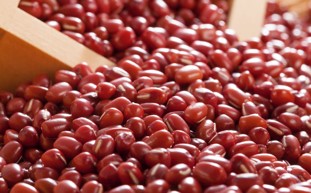
To many culinary professionals in the Western hemisphere, the phrase “red bean” is a generic descriptor that conjures up images of savory kidney beans, chili components, or starchy, rustic legumes. However, in the realm of high-end Japanese confectionery (wagashi), the “red bean” at the core of a dorayaki is not just any legume. It refers specifically to Azuki (Vigna angularis), traditionally prepared as anko.
[Generic "Red Bean"] ──> Confused with Kidney/Chili Beans (Savory/Heavy)
[Authentic "Azuki"]   ──> Specific Wagashi Asset (High-starch, delicate, sweet-tuned)
In English menus and descriptions, translating this ingredient simply as “red bean paste” is a major linguistic compromise. It fails to convey the prestige of the ingredient. In Japanese culinary history, azuki is treated with the same reverence a French pastry chef reserves for premium cacao or heirloom vanilla. It is a highly specialized confectionery asset with a long-established, structurally vital role.
Understanding the fundamental flavor profile of this classic ingredient is the first step toward successful menu translation, as explored in our guide on Understanding the Flavor Profile of a Japanese Classic.
2. Azuki Is Not Just “A Bean Used for Sweet Paste”
For an executive chef or pastry developer, treating azuki as a passive vehicle for sugar is a critical mistake. The intrinsic physical characteristics of the azuki bean itself dictate the exact texture, stability, and mouthfeel of the final confection.
When evaluating azuki as a raw pastry material, you must analyze its properties under several technical criteria:
- Bean Size & Uniformity: Determines the rate of heat penetration. Uneven bean sizes lead to a mixture of over-ruptured and under-cooked cores.
- Skin Thickness: Traditional Japanese cultivars boast incredibly thin yet resilient outer skins. This skin must soften during cooking without cracking prematurely.
- Starch Content: Azuki is uniquely high in starch and exceptionally low in lipids. This starch, when hydrated and gelatinized, forms a smooth, velvety paste that is completely free of greasy residue.
- Water & Sugar Absorption: The starch cells within azuki have a highly specific capacity to bind water molecules, which directly influences how the bean absorbs sugar during the sweetening process.
Rather than looking at azuki as a rustic legume, modern pastry directors are recognizing how this ancient ingredient perfectly aligns with contemporary culinary science, which we discuss in Why Is Traditional Dorayaki Becoming Relevant to Modern Pastry?.
3. Why Azuki Behaves Differently From Beans You May Already Know
If you are a pastry chef who regularly works with standard Western legumes, fruit purées, or nut pastes, you must completely recalibrate your approach when working with azuki. Azuki does not behave like a standard ingredient.
To illustrate these critical molecular differences, review the technical comparison matrix below:
| Technical Parameter | Azuki (Wagashi Engine) | Savory Legumes (Kidney / White Beans) | Fruit Purées & Nut Pastes |
|---|---|---|---|
| Initial Liquid Environment | Pure, Soft Water Only (Zero solutes to maximize starch cell expansion) | Salted water or seasoned stocks (to preserve skin firmness) | Acidified or sugar-concentrated environments |
| Sugar Addition Timing | Delayed (Only added after the starch core is fully cooked and soft) | Rarely sweetened | Co-cooked from the beginning to promote pectin gelation or emulsification |
| Viscosity & Body | Gelatinized starch granules held intact within protected cell walls | Fibrous breakdown and protein-rich thickening | Pectin networks or lipid-in-water emulsions |
| Melt Sync on Palate | Engineered to dissolve simultaneously with the griddled wheat cake | Chewy, skin-retaining, and savory-focused | Rich, high-fat coating or clean, water-soluble dissolve |
If you attempt to cook azuki in a pre-sweetened syrup or add sugar before the starch granules are fully gelatinized, the sudden increase in osmotic pressure will instantly dehydrate the bean’s cell walls. The starch will lock up, leaving you with a grainy, permanently hard core that no amount of boiling can rescue.
4. From Azuki to Anko: The Transformation Matters
A pastry chef does not encounter azuki in a dorayaki simply as a boiled agricultural product; it must undergo a profound physical and chemical transformation to become anko. This transformation must be tightly controlled.
The journey of the bean from field to filling involves distinct technical phases:
[Raw Azuki] ──> [Hydration & Shibukiri (Astringency Removal)] ──> [Soft Boiling] ──> [Mitsuzuke (Sugar Infusion)] ──> [Anko]
- Hydration & Parboiling (Shibukiri): Boiling the raw beans briefly and discarding the initial dark water. This removes bitter tannins and astringent saponins without bursting the delicate skins.
- Soft Boiling: Cooking the beans in pure water until the internal starch granules fully gelatinize. At this point, the beans are completely soft to the touch, but their cellular structure remains perfectly intact.
- Sugar Infusion (Mitsuzuke): Introducing sugar in progressive gradients. This slow infusion coaxes sugar molecules into the starch matrix without triggering cellular collapse.
Through this structured transformation, we build the necessary binding power to bridge the filling and the griddled shell, a concept explored in The Art of Harmony Between Anko and Cake.
5. Tsubuan vs. Koshian: The Red Bean Is Not One Texture
To describe your dorayaki filling accurately, you must understand that “red bean paste” is not a singular texture. The way you process the cooked azuki creates entirely different sensory profiles, categorized into two main styles:
Tsubuan (Chunky, Whole-Kernel Confit)
- The Structure: The beans are sweetened while keeping their skins and shapes entirely intact.
- The Palate Experience: Offers a rustic yet sophisticated bite. When a guest bites into tsubuan, the delicate skins pop gently, releasing a burst of clean bean flavor and natural aroma.
- Best Used For: Standard-sized plated desserts where a robust texture contrast is needed to balance the softness of the griddled cake.
Koshian (Velvety, Fully Sifted Purée)
- The Structure: The cooked beans are crushed, passed through fine mesh screens to remove all outer skins, washed to isolate the pure starch cells, and cooked down with sugar.
- The Palate Experience: An ultra-smooth, silky, and uniform cream-like texture that melts instantly on the tongue without a single trace of graininess.
- Best Used For: Petite-four formats, delicate tasting-menu courses, or multi-layered desserts where a highly refined, uniform mouthfeel is required.
Choosing between tsubuan and koshian is not a matter of authenticity; it is a strategic design choice that alters the entire eating experience, as detailed in our guide on Why Anko Is Essential to Dorayaki.
6. What a Pastry Chef Should Look for in Azuki-Based Anko
Whether you are preparing your own anko from scratch or auditing a supplier’s product for your restaurant, you must move beyond the basic test of “is it sweet?” You must implement a rigorous sensory audit based on five distinct parameters:
- Appearance: The color must be a deep, elegant amethyst-purple, not a dull grey or synthetic black. For tsubuan, the beans should look plump and glossy, with minimal skin breakage.
- Aroma: A clean, earthy, and slightly nutty fragrance of fresh adzuki. If you smell nothing but caramelized sugar, the delicate bean notes have been boiled to death.
- Texture: For koshian, it must feel like silk on the palate. For tsubuan, the skins must be tender enough to dissolve effortlessly without leaving papery, dry residue in the mouth.
- Sweetness Balance: The sweetness must feel clean and sharp, carrying the natural flavor of the bean rather than cloying sugar-heavy weight.
- Moisture & Stability: The paste must hold its shape when piped but remain moist. Excessive free water will migrate into the cake skin, causing a soggy collapse, while over-dried paste will draw water from the cake, leaving it rubbery.
Understanding these parameters is critical for commercial scaling, a topic we cover extensively in The Dorayaki Industry Outlook: A Pastry Chef’s Low-Risk Roadmap to Commercial Scaling.
7. Why “Red Bean Paste” Is an Incomplete Description
When writing menu cards, designing descriptions for service staff, or speaking to food critics, relying solely on the term “red bean paste” represents an incomplete picture.
[Incomplete Menu Card]  ──> "Pancakes filled with red bean paste" ($3 Perception)
[Sophisticated Menu Card] ──> "Artisanal Soufflé Cake with Amethyst Azuki Confit" ($15 Perception)
By reducing this highly technical, hours-long starch-engineering process to “paste,” you strip away the craftsmanship. It makes the dessert sound heavy, unrefined, and rustic. \n\nTo command premium pricing and justify your dessert’s placement in a fine dining course, you must describe the specific variety of azuki, its preparation method (such as tsubuan or koshian), and its structural behavior on the palate. For inspiration on constructing these descriptions, see our guide on How to Design Your Original Dorayaki Recipe.
8. What “Red Bean” Should Mean to a Pastry Chef
From this point forward, when you see “red bean” in a Japanese pastry context, do not think of a basic sweet filling. Think of it as a highly sophisticated pastry ingredient whose variety, preparation, starch structure, and sweetness level dictate the success of the entire confection.
By mastering the science of the bean, you unlock the key to moisture migration control, as outlined in:
- How Does Sugar Control Water Migration in Authentic Dorayaki?
- How Do Japanese Confectioners Design Sweetness in Dorayaki?
- How Does Sugar Shape the Color and Aroma of Authentic Dorayaki?
Managing these moisture variables is the secret to retaining the cake’s lightness, discussed in Why Moisture Control Is Essential in Authentic Dorayaki and How Is Dorayaki’s Signature Texture Designed?. Ultimately, texture is what makes or breaks a premium wagashi, a concept we explore in Why Texture Matters More Than Filling in Dorayaki.
Conclusion: Master the Transformation with Dorayaki Online School
Ultimately, your menu’s intellectual value hinges on execution. To elevate ordinary “red beans” into a velvet, Michelin-caliber azuki confit that melts in harmony with a golden cake, you must bridge theory with rigorous physical practice.
Our hybrid curriculum is engineered to guide you through this technical transformation step-by-step:
- The Digital Technical Training (Master & Advanced Courses)
Start in your own kitchen. Through our comprehensive video lessons, you will practice cooking standard, widely available azuki beans, mastering astringency removal, temperature transitions, and precise sugar-penetration gradients. You will learn the exact fluid mechanics to bake a uniform golden brown, a skill covered in The Secret to a Uniform Golden Brown Color, and explore the cultural palate expectations found in A Flavor Guide Inspired by Doraemon. - The Live 3-Day Tokyo Intensive Schooling
Once you have developed your baseline technique online, you will travel to our Shinjuku studio. These three intensive days are designed specifically to audit your physical execution and verify whether your hand-prepared azuki anko and baking skills have truly reached flawless commercial standards. Under the direct, face-to-face guidance of Master Yoko Senoo, you will calibrate your senses to the correct “An-bai” (balance) and secure direct, custom access to artisan-crafted copper tools.
Do not gamble your restaurant’s reputation on unverified,我流 (self-styled) trial and error. Master the physical laws of Japanese confectionery with the global experts.
▶ Explore The Dorayaki Professional Mastery Path Bundle and Start Your Sourcing Journey Today
Read More
Master Azuki Science : What Is the Red Bean in Dorayaki? A Pastry Chef’s Guide to Azuki
Wagashi Training ROI Analysis: What Is the Real Cost of Wagashi Mastery? A Cold ROI Analysis for Western Pastry Chefs