Q. Why Is Traditional Dorayaki Becoming Relevant to Modern Pastry?
Global dessert trends are moving toward the same values that Japanese wagashi has embraced for centuries. Here’s why professional pastry chefs should pay attention.
Introduction: The Paradigm Shift in Modern Pastry
For years, Western pastry chefs looked to Japanese wagashi through a narrow lens, treating it as a source of exotic flavors like matcha or yuzu to infuse into classic French tarts and mousses. And this surface-level integration successfully satisfied a consumer craving for novelty in Japanese pastry for over a decade.
But today, the paradigm has completely flipped. The global pastry industry is facing unprecedented structural challenges—soaring dairy costs, a demanding shift toward clean-label plant-based alternatives, and a consumer base that rejects excessive sugar. Pastry chefs are finding that simply modifying Western techniques with a splash of yuzu is no longer enough to address these fundamental shifts in modern pastry trends.
Therefore, this is a call to action for visionary chefs. This is not an invitation to simply borrow exotic flavors for a superficial fusion. By mastering the core philosophy of Japanese wagashi, you are not just solving modern kitchen dilemmas; you are equipping yourself to become a pioneer—using centuries-old eastern craftsmanship to forge an entirely new frontier in Western pastry. What if the answers to your toughest modern kitchen challenges have already been perfected for generations inside the world of traditional Japanese sweets? Specifically, the craft of the authentic Dorayaki offers the ultimate gateway to this new culinary realm.
1. Beyond Less Sugar: Sweetness by Design
The Science of Sweetness in Modern Pastry
In Western pastry theory, sugar is far more than a source of flavor; it serves as the essential skeleton of a dessert by providing structure, retaining moisture, stabilizing foams, controlling browning through the Maillard reaction, and extending shelf life. And for generations, high-sugar formulations have been the undisputed technical baseline for achieving consistent volume, texture, and stability in artisan desserts.
But today’s global consumers increasingly demand desserts that taste significantly less sweet, placing modern pastry chefs in a critical dilemma. Because sugar performs multiple heavy-lifting structural functions beyond simple sweetening, blindly slashing sugar percentages inevitably compromises crumb texture, accelerates staling, and degrades overall product quality.
Therefore, instead of asking “how can we use less sugar,” professional chefs must adopt the wagashi perspective: “how should sweetness be designed?” Traditional Japanese wagashi is not inherently a low-sugar confectionery; rather, it treats sugar with scientific intention—calibrating it as a precise functional tool to delay starch retrogradation, manage moisture migration, and support the delicate, earthy profile of ingredients like azuki. By mastering this “subtraction harmony,” you learn that delivering a less saccharine palate doesn’t require destroying the structural integrity of your pastry. It allows you to design sweetness strategically, removing its aggressive dominance so that texture, aroma, and natural ingredients can finally share the spotlight.
2. Texture: Beyond the “Mochi” Craze to Precise Moisture Design
The Next Evolution of Mouthfeel
The global obsession with a chewy mouthfeel has made “Mochi” a permanent fixture in global dessert trends. And pastry kitchens worldwide have rushed to add tapioca starch or glutinous rice flour to their menus to capture this market.
But the market is reaching a saturation point; consumers are growing tired of one-dimensional, overly gummy textures. Furthermore, basic Western adaptations of mochi-style doughs degrade rapidly, drying out within hours and failing to meet the standards required for high-end Japanese pastry.
Therefore, learning the art of Dorayaki is the logical next step for chefs looking to master advanced texture. The shell of a traditional Dorayaki relies on a precise San-do-wari (equal thirds) ratio, leveraging the hygroscopic properties of honey and mirin to lock in moisture long after cooling. Combined with sodium bicarbonate, it creates a unique honeycomb structure that is soft, bouncy, and melts cleanly on the palate—a sophisticated dorayaki global trend asset that solves the problem of shelf-life moisture migration.
Deep Dive: Want to see the exact structural science behind moisture migration in wagashi?Click here to read our technical breakdown on Dorayaki Moisture Design.
Understanding the Structure: At first glance, dorayaki patties look similar to Western breakfast pancakes—but their formulation, moisture activity, and technique couldn’t be more different. For a line-by-line comparison: Q. How does a Japanese Dorayaki pancake differ from a Western pancake?
3. Plant-Based Innovation: The Struggle with Substitutes vs. Clean-Label Anko
Achieving Luxury Without Compromise
The demand for vegan and plant-based desserts is no longer a niche market; it is a baseline expectation for luxury food venues in culinary hubs like New York. And chefs spend countless hours experimenting with aquafaba, chia gels, and hydrogenated fats to replicate the richness of eggs and cream.
But these substitutes often introduce unappealing aftertastes, heavy mouthfeels, or long chemical ingredient lists that violate the “clean label” ethos sophisticated diners demand.
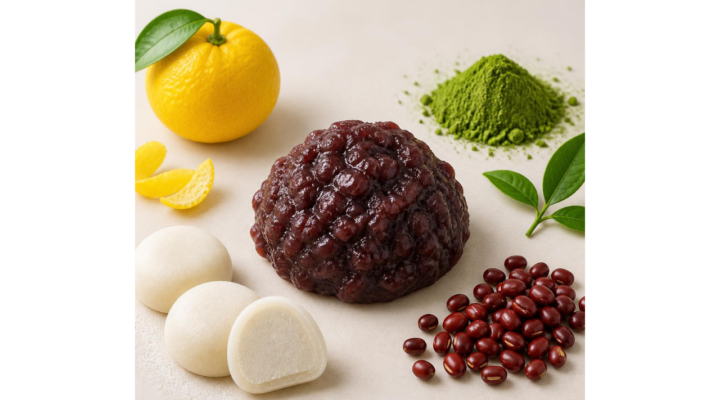
Therefore, instead of trying to artificially mimic dairy, chefs can turn to Anko (sweet red bean paste)—the heart of authentic desserts. Made purely from azuki beans, water, and sugar, Anko is inherently 100% plant-based and naturally clean-label. The natural gelatinization of azuki starch combined with its high fiber content provides a rich, velvety satisfaction that rivals dairy fats without a single chemical additive. It is a time-tested, luxury plant-based solution that requires no imitation.
Deep Dive: Mastering the Science and Potential of Anko
- The Technical Backbone: To truly understand how this legume-based paste functions as the structural and flavor core of Japanese confectionery, read our deep dive on Q. What Makes Anko Essential to Dorayaki? to master the precise balance of bean selection and texture control.
- The Menu Application: Ready to move past synthetic dairy alternatives and chemical binders? Explore how to leverage this clean-label powerhouse as a premium, versatile asset on your modern pastry menu in Q. Could Anko Be the Next Plant-Based Dessert Ingredient?
- While matcha has paved the way, a new wave is rising. Explore our dedicated analysis on why Azuki is capturing the attention of top pastry chefs and how “Anko Design” can elevate your dessert program. Read the Full Article: “After Matcha: Why Azuki Could Become the Next Japanese Ingredient Every Pastry Chef Should Know”
Related Article for Chefs: Interested in the technical side of Japanese fillings? Discover why anko isn’t just “Japanese plant-based pastry cream” and how its design philosophy redefines texture and sweetness: Why Traditional Anko Follows a Different Design Philosophy Than French Pastry Cream?
The Anatomy of a Superfood: The global shift toward “Healthy Indulgence” is driven by consumers seeking real, active health benefits from their luxury desserts. But what exactly makes authentic Wagashi fit this trend so perfectly? Dive deep into the anatomy of the Azuki bean and discover the compelling nutritional data that perfectly aligns with modern wellness demands: Q. Beyond Sweetness: How Azuki Nutrition Transforms Dorayaki into a High-Margin Functional Dessert
4. Fermentation: Transforming Gut Health Trends into High-Margin Retail
Crafting New Cash Points in the Pastry Business
Fermentation and gut health are two of the most powerful forces driving the food industry today. And bakeries have successfully capitalized on this by elevating sourdough and ancient grains into premium, everyday staples.
But the pastry department has struggled to integrate fermentation into sweet menus without disrupting delicate dessert flavor profiles or overcomplicating production lines.
Therefore, the broader ecosystem of Dorayaki craftsmanship offers an elegant solution: Hakkou Azuki (Koji-fermented red bean paste) and miso-infused batters. By utilizing Koji (rice mold), chefs can draw out intense, natural sweetness from beans with zero added sugar. This creates a powerful spin-off product: a sugar-free, probiotic, plant-based spread that can be jarred and sold at a premium. It expands your business model from a simple dessert menu item into a highly profitable retail line.
Note: Please note that the standard Dorayaki Online School curriculum does not include instructional materials on fermented azuki. However, we offer bespoke recipe consulting for commercialization and strategic support for export sales. Please contact us to learn more.
5. Storytelling & Craftsmanship: Consuming Meaning in the Modern Era
Elevating Value Through Narrative
Modern consumers, particularly Gen Z and affluent diners, are no longer just buying sugar and calories; they are investing in identity. And they are willing to pay a premium for brands that showcase artisan desserts, transparency, and verified heritage.
But in a crowded market filled with visually repetitive Instagram-bait desserts, true authenticity is incredibly difficult to scale or fake.
Therefore, mastering traditional Japanese sweets infuses your brand with a deep, unassailable narrative. Every element of wagashi is tied to the micro-seasons (the 24 solar terms), poetry, and the Zen spirit of hospitality (Omotenashi). When you serve a flawlessly executed Dorayaki, you aren’t just serving a pastry—you are presenting centuries of refined craftsmanship and a poetic connection to nature that mass-market competitors simply cannot replicate.
6. Sustainability: Hedging Against Volatility with Resilient Staples
Designing a Climate-Resilient Menu
The core ingredients of classic Western pastry—butter, chocolate, and heavy cream—are facing massive price volatility. And due to climate change and supply chain shifts, sourcing premium dairy and cacao sustainably is becoming increasingly difficult and expensive.
But running a premium pastry program requires cost predictability and a commitment to environmental responsibility.
Therefore, the Dorayaki format serves as a remarkably resilient and sustainable culinary platform. The base ingredients—flour, eggs, and azuki beans—are agriculturally stable and highly adaptable. The Dorayaki shell and filling act as a blank canvas, allowing you to seamlessly integrate local honey, regional beans, or seasonal fruits unique to your geography. It allows you to build a sustainable, climate-conscious dessert program without sacrificing the luxury appeal of your menu.
Conclusion: The Future of Pastry is Moving Toward Wagashi Thinking
Looking back at these shifts, a profound truth becomes clear. And modern pastry is not becoming Japanese; rather, the global industry is naturally converging with the exact values that wagashi has preserved for centuries.
But in this crucial turning point, the industry doesn’t need more decorators or superficial flavor fusions. It deeply hungers for visionary leaders who can bridge traditions, science, and philosophy.
Therefore, learning the science of Dorayaki is your gateway to becoming that bridge—a pioneer who doesn’t just follow global dessert trends, but actively redefines them. The future of pastry belongs to the chefs who master restraint, purposeful sweetness, and narrative. These are the exact principles quietly refined by generations of Japanese artisans. If you are ready to bring this competitive edge into your own professional kitchen, your journey begins here.
Operational Blueprint: Trends shape the industry, but technique saves the kitchen. Discover how traditional dorayaki science directly addresses today’s pressing structural and financial dilemmas for professional pastry shops in our featured guide: Q. How Traditional Dorayaki Can Solve Today’s Biggest Pastry Challenges
Master the Craft: Join Our Dorayaki Online School
The global culinary elite in cities like New York are actively seeking pastry chefs who understand the intersection of health, sustainability, and profound craftsmanship. And our Dorayaki Online School & Intensive Schooling Program is specifically designed for industry professionals who need to master these authentic techniques efficiently without leaving their businesses.
But space in our hybrid cohort—combining rigorous digital modules with hands-on professional schooling—is strictly limited to ensure direct mentorship from authentic Japanese wagashi masters.
Therefore, do not settle for superficial flavor fusions. Step into the next era of pastry as a true culinary pioneer. Master the authentic foundations, bridge the gap between East and West, and lead the future of modern pastry.
→ [Apply to the Dorayaki Online School for Professional Pastry Chefs Now]
Read More
Wagashi Training ROI Analysis: What Is the Real Cost of Wagashi Mastery? A Cold ROI Analysis for Western Pastry Chefs