Q. Can Dorayaki Introduce Customers to Vegan Wagashi?
Introduction: The Gateway Strategy
Consumer demand for premium plant-based desserts continues to climb, and Japanese wagashi is unusually well positioned to capture it — upscale diners already associate Japanese confectionery with a clean, natural, dairy-free image. So the commercial instinct is reasonable. But the instinct most chefs act on next is not: they immediately try to engineer a fully vegan Dorayaki by swapping out its core components. That is a tactical error. The traditional Dorayaki texture depends on the molecular behavior of whole eggs — for structure, emulsification, and aeration — and removing them without re-engineering the entire formula yields a dense, rubbery cake that forfeits the very quality your program is selling. Therefore the right question is not how do I make this classic vegan? It is how do I use this classic to introduce my guests to the wider world of wagashi — many parts of which are naturally vegan already. That shift in framing is the Gateway Strategy.
Part 1: Why Dorayaki Is the Ideal Gateway
Introducing an unfamiliar flavor profile requires lowering the guest’s guard through visual familiarity, and Dorayaki’s structure is an almost perfect psychological bridge for Western palates. It reads as a pancake — comforting, recognizable, instantly trusted — with none of the unfamiliar, gelatinous forms that make other Japanese sweets feel like a risk to order. A guest will add it to a specialty coffee or afternoon tea without hesitation.
But the visual comfort of the skin is only the delivery mechanism; the experience itself rests on the filling — and what most teams miss is that Anko is already a fully evolved, nutrient-dense, clean-label asset in its own right.
Therefore you do not need to compromise the historic Dorayaki texture to reach vegan diners at all. You use the traditional, egg-inclusive Dorayaki as the promotional tool — the thing that teaches your audience’s palate to love authentic red bean paste in the first place.
(For the business case behind the raw material itself, see our strategic analysis: Q. Could Anko Be the Next Plant-Based Dessert Ingredient?)
Part 2: What Comes After Dorayaki
Once a guest has tasted a premium Dorayaki and developed a genuine appreciation for the earthy complexity of Anko, a far more profitable journey opens up — and this is where naturally vegan wagashi enters. You no longer need compromised substitute recipes, because the traditional wagashi lexicon is already full of masterpieces that are inherently dairy-free and egg-free.
But most pastry directors overlook these formats entirely, assuming centuries-old recipes can’t meet a contemporary fine-dining aesthetic. Therefore the opportunity is wide open: with the traditional foundation mastered, you can move your newly educated customers onto naturally vegan, high-margin signatures.
Yokan & Mizu-Yokan — sleek agar-set bean blocks that work as a clean canvas for summer Yuzu or layered coconut milk, plated as architectural, restaurant-grade desserts.
Warabi-mochi — translucent bracken-starch cubes dusted with Kinako and brown sugar syrup, built directly for New York’s appetite for chewy textures.
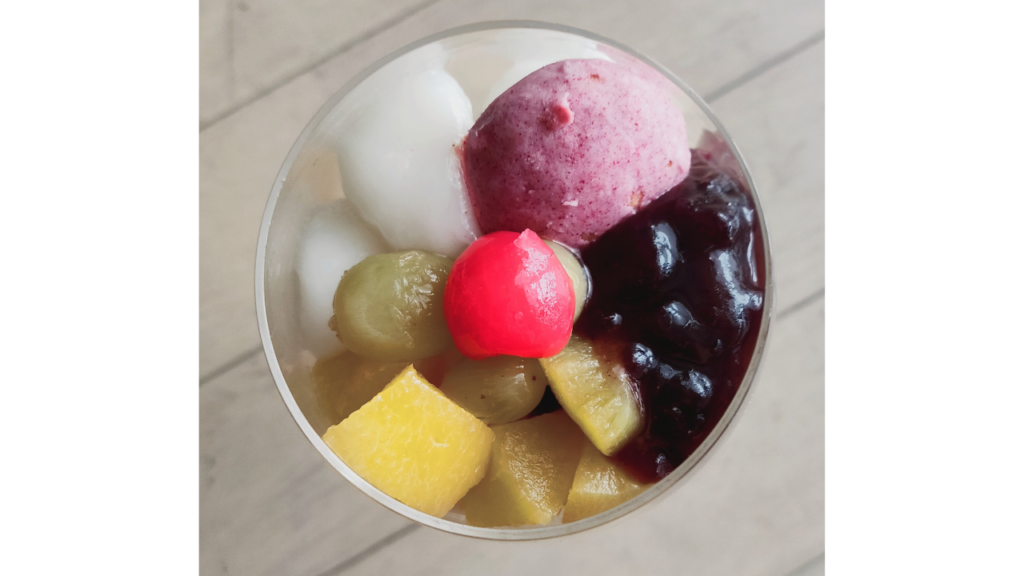
Anmitsu assemblies — composed bowls pairing smooth bean paste with fresh berries, agar cubes, and house sorbets, delivering multi-sensory contrast with zero dairy or egg to engineer around.
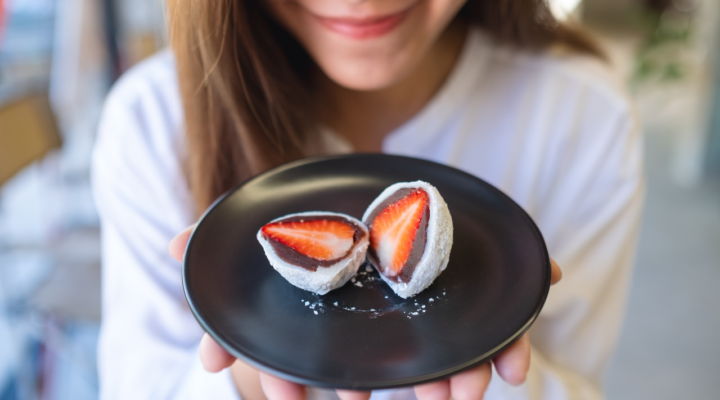
Ichigo Daifuku — a whole fresh strawberry wrapped in sweet bean paste and a soft, chewy Gyuhi shell, naturally egg- and dairy-free and built around exactly the kind of seasonal fruit-and-Anko pairing your Dorayaki guests already know.
Part 3: Why Anko Comes First
Whether your goal is a seasonal vegan menu, plant-based innovation, or a full authentic Japanese concept, every one of those paths converges on a single technical skill: mastery of Anko. It is the universal language of the entire discipline — it dictates the sugar boundaries, texture synchronization, and moisture migration of every finished wagashi, which makes it the mandatory starting point for any serious program.
But Azuki is a volatile agricultural ingredient that shifts with harvest and origin, and attempting to master it from unverified online recipes reliably produces bitter, unrefined paste that damages rather than builds a menu’s reputation. Therefore, launching a world-class program without operational risk requires expert-led, structured training.
Step 1: The Dorayaki Professional Mastery Path Bundle. The online curriculum where your team masters traditional Anko formulation, sugar hydration, and core skin mechanics — on your own equipment, at your own pace. We expect professional students to complete at least 100 autonomous practice cycles to build a reliable base and learn the fluid behavior of the dough firsthand.
Step 2: The 3-Day Intensive Live Schooling in Tokyo. Not an introduction — a final quality audit. Working face-to-face under the direct, sensory supervision of master wagashi chefs, you will refine your hand movements, see the precise visual cues of correct consistency, and receive expert verification that your work has reached an uncompromised consumer standard — the diagnostic eye that lets you launch a menu line built to hold its own in your market.
Master the foundation. Then open the gateway.
[Explore The Dorayaki Professional Mastery Path Bundle & Secure Your Tokyo Schooling Spot →]
Deepen Your Expertise: Marketing the Health Benefits of Wagashi
While the “vegan” label effectively attracts wellness-conscious customers, highlighting specific functional benefits will seal the deal and justify premium pricing. Explore the exact nutritional metrics—such as iron for recovery and resistant starch for gut health—that allow you to confidently sell dorayaki as the ultimate beauty and energy snack: [Functional Dessert Strategy] Q. Beyond Sweetness: How Azuki Nutrition Transforms Dorayaki into a High-Margin Functional Dessert
The Dorayaki Quality Design Series
Build an uncompromised command of authentic Wagashi engineering. Explore our complete professional knowledge series to master the foundational design laws of Japanese confectionery:
- Pillar Essay: Q. What Defines Dorayaki? The Art of Harmony Between Anko and Cake
- Quality Guide: Q. What Makes Anko Essential to Dorayaki?
- Gluten-Free Analysis: Q. Why Don’t Traditional Japanese Wagashi Shops Sell Gluten-Free Dorayaki?
- Texture Design: Q. How Is Dorayaki’s Signature Texture Designed?
- Egg Physics 101 : Q. Dorayaki Eggless: Why the Zero-Fat Shell Requires Egg Physics to Exist