Q. Dorayaki Recipe Custard: Aligning Your Pastry Passion with Traditional Structural Science
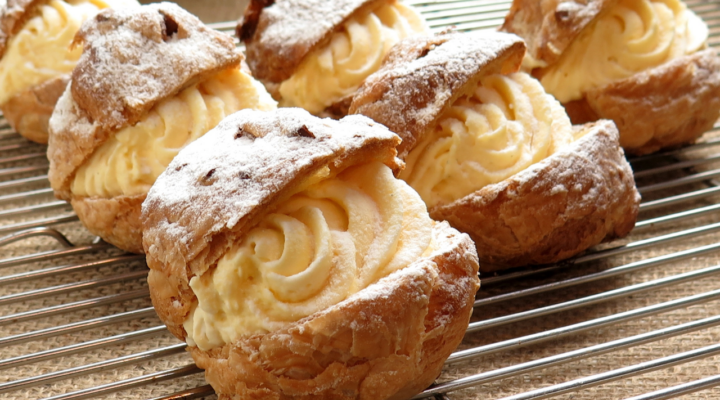
Many pastry chefs share a beautiful vision: serving their signature, silky vanilla custard (Crème Pâtissière) inside a warm, golden dorayaki shell. Imagining the joy of regular diners taking their first bite of this familiar, comforting cream wrapped in a Japanese dessert format is a powerful spark for culinary innovation. Your local guests know your palate, and pairing your celebrated custard with a new format feels like the perfect, welcoming gateway.
When you attempt this transition using a classic French recipe, however, you may encounter subtle physical and thermodynamic mismatches. Rather than seeing this as a barrier, understanding these variables is the key to elevating your custom creations.
The Physics of the Shell-to-Filling Interface
Traditional Western custard and authentic Japanese dorayaki shells are governed by different physical structures:
- Water Activity Migration: Classic Crème Pâtissière is a rich, high-moisture emulsion. In contrast, the classic dorayaki shell is fat-free, designed to actively pull moisture through hydrogen bonds to stay soft. When paired directly, the shell draws free water from your custard. Within hours, the shell becomes soggy and loses its structural integrity, while the cream can separate and lose its velvety texture.
- The Temperature Paradox (Starch Retrogradation): Custard requires refrigeration to maintain its emulsion and food safety. Authentic, fat-free dorayaki shells, however, undergo rapid starch retrogradation (crystallization) at cold temperatures (4°C / 39°F). Placing the combined dessert in the fridge causes the shell to lose its delicate, pillowy elasticity, leaving it dry and dense.
The Creative Advantage of the Gold Standard
To make your dream of a perfect custom-filled dorayaki behave predictably on a commercial menu, the most effective path is to study how the authentic format maintains its perfect harmony.
The traditional combination of dorayaki shell and sweet adzuki bean paste (Anko) is a closed thermodynamic system perfected over centuries. The gelatinized bean starches in Anko act as natural moisture locks, stabilizing water activity without lipids.
Learning how this baseline system balances water migration, structural elasticity, and shelf life is not about restricting your creativity. On the contrary, mastering the physical relationship of the original shell-and-Anko pairing gives you the foundation to seamlessly adjust and stabilize your own custom pastry ideas.
The Two-Step Path to Structural Freedom
Before attempting to translate your signature custard into this format, we invite you to master the baseline physics of the gold standard:
Step 1: Sensory Integration Online (The Online Bundle)
You do not need specialized equipment to begin. In the basic portion of The Dorayhttps://online.dorayakis.com/p/the-dorayaki-professional-mastery-path-bundleaki Professional Mastery Path Bundle, we guide you through practicing your ladling, baking, and moisture checks using a standard crepe pan.
Here, you will learn the physical signs of starch hydration and temperature adjustments, producing premium mini-shells. These smaller portions carry authentic, professional quality and can immediately be packaged as premium takeout treats while you build your muscle memory.
Step 2: Live Verification in Tokyo (3-Day Tokyo Schooling)
Once you have practiced the basic structure, the next step is to ensure your technique is aligned with professional standards. During our private 3-Day Live Schooling in Tokyo at Wagashi Labo Ichiyo, you will demonstrate your batter mixing, griddle timing, and sensory checks in front of Master Yoko Senoo.
The Master will review your form, refine your adjustments, and help correct any self-taught habits before they become permanent. Once you master this authentic structural foundation under direct guidance, you gain the technical authority to confidently adapt your own creative fillings for a busy restaurant kitchen.
Deepen Your Technical R&D: Why Custom Fillings Fail Before pairing your signature custard or creams with the shell, explore the 10 physical and thermodynamic variables that govern successful custom filling integration: Read: Why Your Custom Dorayaki Filling Fails (And How to Fix It)
The Griddle Craft: Baking Flawless Shells Master the physical postures, hand-height temperature checks, and visual timing triggers that Tokyo’s top bakers use to bake perfect shells without digital calculators: Read: Dorayaki Top Baker: How to Master the Griddle Without Numerical Calculators
Kitchen Operations: Managing Batter Stability Discover the continuous, real-time loop of “Anbai-tori” (sensory water calibration) to keep your batter behaving predictably through a hectic 4-hour dinner service: Read: Dorayaki Batter: How to Maintain Predictable Viscosity Throughout a Busy Dinner Service