Q. Beyond Mochi: How “Dorayaki Variations” Unlock High-Margin Menu Integration for US Chefs
This article is a deep-dive extension of our pillar guide: The Dorayaki Industry Outlook: A Pastry Chef’s Low-Risk Roadmap to Commercial Scaling.
Introduction: The Search for the Next Premium Asian Dessert
Elite pastry chefs and menu developers in high-end US dining recognize that diners are actively seeking inclusive, low-fat, plant-based desserts — and traditional wagashi, with its clean-label profile and natural allergen-free baseline, is well positioned to capture that “healthy indulgence” market. But execution has two failure modes on either side. A stark, unmodified Dorayaki with plain red bean filling can alienate Western diners unfamiliar with legume texture. And casually stuffing the cake with Western toppings, with no scientific calibration behind it, cheapens the dish into a low-value pancake sandwich instead of elevating it. Therefore turning this traditional asset into a genuine $8–$12 menu item requires mastering flavor localization as a structured discipline — pairing the wheat-egg-sugar canvas with modern fats and acids through calculation, not guesswork.
Part 1: The 17-Topping Empirical Trial — Lessons from Mascarpone
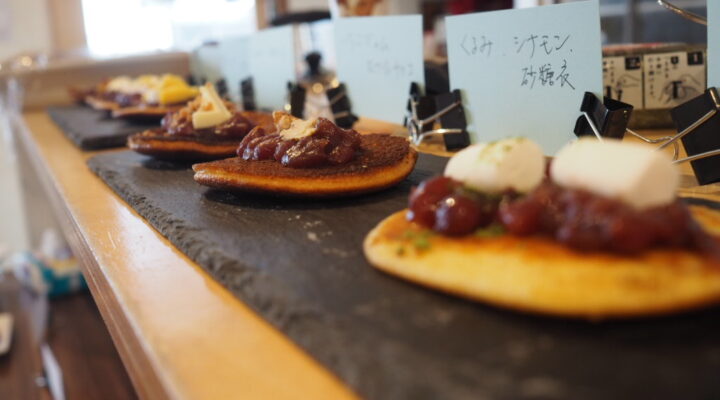
To move past speculation, our culinary research team ran an empirical flavor trial: over 120 artisan Dorayaki skins baked, and guest reactions to 17 distinct toppings systematically tracked — full results documented in our field report, Want to Try Creative Dorayaki Toppings? Event Report. The tasting matrix spanned both traditions: yellow peach, dried cranberry, banana, orange, mascarpone, crumble, walnut, strawberry jam, condensed milk, custard, sugar glaze, honey, Matcha, milk and white chocolate, Yuzu, salt, marshmallow. The findings held up internationally — our case study How Do French People React to Trying Dorayaki for the First Time? documented the same cross-cultural adaptation during a major Azuki event in Paris, where long lines formed at our street-food activation at Jinchan Shokudo. Western diners embrace high-end wagashi fusion readily — the data backs that up.
But stacking high-fat dairy or sticky marshmallow into a standard Dorayaki isn’t sufficient on its own, because every added ingredient shifts the system’s water activity. Introduce a foreign structural element without accounting for it, and the oil-free skin either dissolves into a soggy paste or hardens into a dry shell within twelve hours. Therefore every topping has to be read as a chemical compound — one that either donates or withdraws water from the established starch-protein scaffold, not just a flavor choice.
Part 2: The Chemistry of Micro-Calibration — Fats, Acids, and Moisture
Designing a flawless fusion Dorayaki means understanding how different ingredient categories interact with the base batter and filling at a molecular level — sorting toppings into fats, acids, or moisture donors makes the calibration tractable. A high-fat element like mascarpone needs its lipid melting point aligned with the Anko’s natural dissolution rate, so cream and bean paste liquefy together rather than leaving a heavy film on the tongue. Acidic fruit — yellow peach or dried cranberry paired with condensed milk — lowers the surrounding pH, which accelerates starch retrogradation in the wheat cake if left unaddressed.
Introduce either category without adjusting the base formula, and unbuffered moisture migration wins: a soggy crust that sticks to packaging, or a dense, rubbery crumb that’s lost its melt. Therefore a professional shop recipe uses precise Brix and pH micro-calibration to offset these additions — slightly raising the sugar-holding (bound water) capacity of the base Anko when adding wet fruit, and slightly elevating the alkaline baking soda buffer in the batter to neutralize the structural damage acidic toppings would otherwise cause.
[Unbuffered fusion — system collapse]: acidic fruit or dairy fat added blindly, starch retrogradation and a free-water tsunami, soggy skin and gummy crumb.
[Micro-calibrated fusion — seamless melt]: Brix adjusted in the Anko, alkaline buffer in the batter, volatile water locked in, a perfect 24-hour melt sync.
Part 3: Operational Leverage and the “Newstalgia” Strategy
From a business standpoint, calibrated Dorayaki variations are a genuinely powerful play: “Newstalgia” — a nostalgic, universally familiar pancake silhouette on the outside, a modern culinary narrative on the inside. That positioning supports $8–$12 menu pricing against a raw food cost of just 10–16%.
But running a diverse, seasonal dessert program can quickly turn into an operational headache — new recipes, separate line-cook training, perishable inventory across five different desserts all inflate labor cost and waste fast. Therefore the real leverage in this system is structural: master one flawless, stabilized base batter and core Anko, and your kitchen can roll out effectively unlimited seasonal variations — summer Peach-Mascarpone to winter Spiced Chocolate — with zero added equipment and consistent execution every time.
The Seasonal Starch Trap Applying standard Western yam or sweet potato recipes to oil-free Wagashi creates an immediate structural collapse. Discover why dairy-free sweet potato fillings fail commercially, and why Chestnut (Kuri) serves as the only viable autumn alternative: Dorayaki Sweet Potato: Why Standard Yam Fillings Fail in Fatless WagashiYour Technical Roadmap to Menu Success:
- Step 1: The Online Technical Intensive
Enroll in The Dorayaki Professional Mastery Path Bundle. Acquire the exact fluid mechanics, whole-egg foaming science, and sugar hydration benchmarks online. Under the guidance of our digital curriculum, master the visual and tactile sensory checkpoints required to bake a flawless, mirin-free, and halal-compliant base skin and cook standard adzuki beans without skin rupture in your own kitchen. - Step 2: The Tokyo Live Verification & Menu Optimization
Once your online theory is unbreakable, join us live for our private 3-Day Tokyo Schooling. Work face-to-face with Master Artisan Yoko Senoo at Wagashi Saryo Ichiyo to physically audit your boiling and baking techniques, receive real-time sensory corrections on your sugar penetration, consult directly on custom local ingredient sourcing, and establish direct supply-chain connections with elite Japanese OEM manufacturers to scale your business cleanly.
Explore The Dorayaki Professional Mastery Path Bundle and begin your custom recipe design today →
References
- The Power of Azuki (『あずきの力』), supervised by Dr. Jun Kato.
- The Power of Azuki is So Amazing (『あずきの力はこんなにすごい』), supervised by Dr. Jun Kato.
- Azuki-en Magazine Report: “Want to Try Creative Dorayaki Toppings? Event Report”
- Azuki-en Case Study: “How Do French People React to Trying Dorayaki for the First Time?”
- Azuki-en Event Feature: “An Azuki Event Was Held in Paris”
- Azuki-en Event Live Coverage: “Long Lines at the Dorayaki Event in Paris at Jinchan Shokudo”
The Dorayaki Quality Design Series
Build an uncompromised command of authentic Wagashi engineering. Explore our complete professional knowledge series to master the foundational design laws of Japanese confectionery:
- Pillar Essay: Q. What Defines Dorayaki? The Art of Harmony Between Anko and Cake
- Quality Guide: Q. What Makes Anko Essential to Dorayaki?
- Market Strategy: Q. Could Anko Be the Next Plant-Based Dessert Ingredient?
- Gluten-Free Analysis: Q. Why Don’t Traditional Japanese Wagashi Shops Sell Gluten-Free Dorayaki?
- Texture Design: Q. How Is Dorayaki’s Signature Texture Designed?
- Vegan Strategy: Q. Can Dorayaki Introduce Customers to Vegan Wagashi?
- Pillar Page: Q. Can Sugar Be Replaced in Authentic Dorayaki Recipes?
- Troubleshooting Guide: Q. Why Your Custom Dorayaki Filling Fails (And How to Fix It)
- Industry Pillar: Q. The Dorayaki Industry Outlook: A Pastry Chef’s Low-Risk Roadmap to Commercial Scaling