Q. How Does Sugar Design Dorayaki’s Fluffy Structure?
This article expands on one function from our pillar guide, Q. Can Sugar Be Replaced in Authentic Dorayaki Recipes? — specifically the second: Structure & Foam Stability. For the full picture of sugar’s seven structural roles, start with the pillar.
Introduction: Sugar Is Not Optional Here
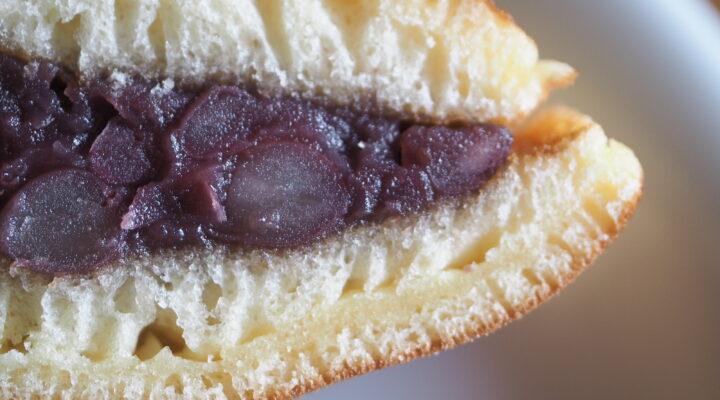
Every trained pastry chef knows how sucrose stabilizes egg foam for a meringue, and how it governs crumb elasticity in a cake. In Western baking, trimming sugar or swapping in a liquid alternative is a routine calibration — fat and starch can absorb the difference. Dorayaki gives you no such cushion. The skin runs on zero butter, oil, or shortening; the entire structure depends on sugar-protein bonding alone. Pull the sucrose out of a flash-baked, fat-free, whole-egg batter, and the pore architecture collapses under heat — what was a velvet crumb becomes a dry, coarse pancake. Here are the four thermodynamic points where that dependency plays out.
1. Denaturation Delay
Sucrose raises the temperature at which egg albumen coagulates, buying the whipped air cells time to expand before the structure sets. Strip it out on a 200°C copper plate and the proteins coagulate on contact — the scaffold locks before the gas can expand, and the cake stays flat and rubbery instead of lifting.
2. Viscosity and Foam Stability
A Dorayaki batter is far more fluid than a Western sponge, and it needs a stable syrup matrix to keep its micro-bubbles from merging. Dissolved sugar provides exactly that viscosity, cushioning each bubble. Swap in a low-viscosity syrup like agave and that film loses its surface tension — bubbles collapse and merge under heat, and the crumb turns coarse and irregular, closer to a rustic pancake than a wagashi skin.
3. Gluten Interference Without Fat
Western pastry keeps gluten in check with fat — butter or oil coating the flour proteins. Dorayaki has no fat to spare, so sugar does that job instead: it outcompetes the flour for water, starving gluten development before it can toughen the crumb. Cut the sugar and the flour proteins hydrate freely, building a chewy, bread-like structure that has no place in a Dorayaki.
4. The Leavening Trap
When a low-sugar batch won’t lift, the instinct is to add more baking soda or powder. But generating gas isn’t the same as holding it — without sugar’s protein scaffold to support the expanding cells, the walls can’t bear their own weight as the cake cools, and the centers cave into a hollow, crumbly mess.
Conclusion: Engineer the Texture, Don’t Just Cut the Sugar
Western technique reaches for fat and syrup to soften a crumb. Wagashi does it entirely through sugar’s grip on protein. Halve the sugar or swap it for a volatile liquid sweetener, and the foam collapses under heat before you ever get to taste the result.
Mastering the exact hydration ratios and copper-plate thermodynamics behind this takes structured practice, not a substitution chart.
Step 1: The Dorayaki Professional Mastery Path Bundle. The online curriculum where your team masters San-Do-Wari sugar hydration, oil-free surface grilling, and bean-paste viscosity control — on your own equipment, at your own pace. We expect professional students to complete at least 100 autonomous practice cycles before attempting any custom substitution.
Step 2: The 3-Day Intensive Live Schooling in Tokyo. Your final quality audit. Working face-to-face under the direct, sensory supervision of master wagashi chefs, you will refine your hand movements, read the exact visual cues of correct consistency, and receive expert verification that your work meets an uncompromised, production-grade standard.
[Explore The Dorayaki Professional Mastery Path Bundle & Secure Your Tokyo Schooling Spot →]
The Dorayaki Quality Design Series
Build an uncompromised command of authentic Wagashi engineering. Explore our complete professional knowledge series to master the foundational design laws of Japanese confectionery:
- Pillar Essay: Q. What Defines Dorayaki? The Art of Harmony Between Anko and Cake
- Quality Guide: Q. What Makes Anko Essential to Dorayaki?
- Market Strategy: Q. Could Anko Be the Next Plant-Based Dessert Ingredient?
- Gluten-Free Analysis: Q. Why Don’t Traditional Japanese Wagashi Shops Sell Gluten-Free Dorayaki?
The Flavor Translation:What Does Dorayaki Taste Like? Understanding the Flavor Profile of a Japanese Classic- Wagashi Taxonomy 101: Japanese Confectionery 101 for Pastry Chefs: Structurally Classifying Dorayaki in the Sweets Universe
- Egg Physics 101 : Q. Dorayaki Eggless: Why the Zero-Fat Shell Requires Egg Physics to Exist