Beyond the Recipe Book: Why Professional Dorayaki Requires Checkpoints, Not Just Steps
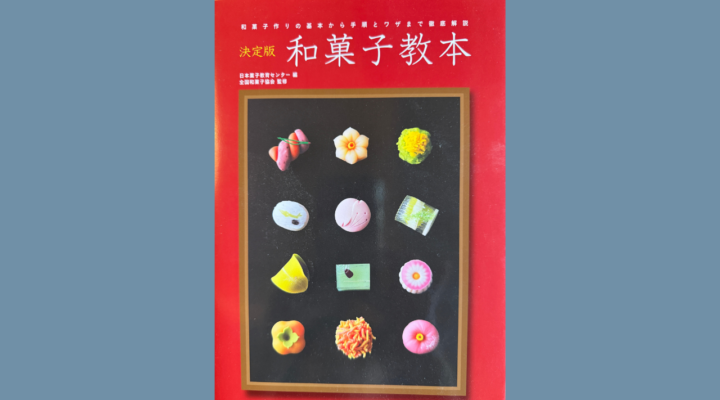
For an executive pastry chef, the library is a sanctuary of inspiration. Displaying an authoritative volume like the “Definitive Edition Wagashi Textbook” (『決定版 和菓子教本』) on your kitchen shelf is excellent for reference. Standard culinary books are highly valuable for a seasoned professional to review established steps or confirm ingredient ratios.
However, attempting to build a commercial-scale wagashi program from scratch using only a traditional recipe book is a high-risk operational decision.
Traditional textbooks are linear. They guide you through steps (What to do) but fail to establish critical checkpoints (When to proceed) and recovery protocols (How to fix errors). In a professional kitchen, this distinction represents the margin between high-yield consistency and costly raw material waste.
The Anatomy of a Checkpoint: The Adzuki Wrinkle Test
Consider the fundamental process of cooking adzuki beans for authentic anko.
A standard cookbook or recipe textbook will direct you to boil the beans, drain the bitter water, add cold water (bikkuri-mizu / shock water), and continue simmering until soft. These are steps. If a commis chef follows these instructions literally, the result will often be unevenly cooked beans with ruptured starch cells, creating a pasty, flat-tasting confit.
In contrast, a B2B technical manual establishes precise physical indicators. In the initial simmering phase, the critical inquiry is not time; it is a visual and tactile audit:
“Have the wrinkles on the adzuki skins fully stretched?”
This is a physical checkpoint. During the early boiling stages, the skins of the adzuki beans wrinkle as they absorb water unevenly. Only when the thermal conduction and hydration reach equilibrium do these wrinkles stretch tight, resulting in a smooth, plump surface.
- If the wrinkles have stretched tight: You have verified even hydration. You may safely proceed to the sugar-infusion stage without risking hard-centered beans.
- If the wrinkles are still visible: You must halt. Proceeding to add sugar at this point will lock in the starch structure permanently due to osmotic pressure, leaving you with a batch of ruined, uncorrectable ingredients.
A textbook tells you to cook. A professional system tells you exactly when to stop and look.
The Cost of No Recovery
The second structural failure of standard print manuals is the lack of troubleshooting and recovery protocols.
In a live, fast-paced commercial pastry station, variables fluctuate. The mineral content of your local water, the ambient humidity of your kitchen, and the heat retention of your specific griddle surface will distort the outcome of a standard recipe.
If your dorayaki batter begins to spread too thin on your griddle, or if your bean paste is losing its sheen, a standard textbook offers no diagnostic support. It cannot tell you how to adjust the brix level or how to stabilize the emulsion when the batter chemistry shifts.
Without explicit recovery instructions, your culinary team is left to run blind trial-and-error experiments, consuming valuable labor hours and discarding expensive organic ingredients.
The DOS Solution: A True Technical Quality Control Manual
The Dorayaki Professional Mastery Path Bundle ($789 USD) does not sell generic recipes. We provide a structured quality control system designed for commercial kitchens.
Our digital manual—featuring the comprehensive Checkpoints of the Master Course—replaces vague culinary prose with binary quality gates:
- Strict Verification Gates: Every stage of production is governed by physical checks, such as the exact stretch of the adzuki skin, batter gravity metrics, and specific crumb structure indicators.
- Explicit Recovery Protocols: If a metric falls outside the target zone, the manual provides the exact scientific adjustments needed to rescue the batch.
- Procurement Mapping: Complete lists of comparable western ingredients and regional sourcing paths to ensure your raw materials match the physical requirements of the formulas.
You can secure immediate digital access to these technical assets via the Teachable Secure Checkout.
From Paper to Physical Audit: The Ultimate Calibration
Mastering the theory of checkpoints online is the essential first phase of technology transfer. It allows you to build a reliable mechanical foundation at your own station, in your own time, using accessible tools.
But paper and screens cannot physically watch you work. They cannot audit the fluid motion of your wrist or verify the exact sensory bounce of your finished cake.
This is why the online curriculum is the strict prerequisite for our elite 3-Day Tokyo Intensive Mastery ($7,800 USD).
Once you have mastered the checkpoint theory at home, you travel to our新宿 (Shinjuku) studio for three days of intense physical calibration. Master Yoko Senoo will directly audit your execution, refine your physical recovery techniques under pressure, and sign off on your customized, restaurant-ready signature recipe.
The 3-day program includes all specialized materials, griddle access, and lunches. Airfare and accommodations are self-funded.
Invest in a System, Not a Recipe
A beautiful cookbook on your shelf is an aesthetic asset. But a commercial-grade pastry program requires a system of strict physical checkpoints, error correction, and professional human validation.
Prime your team with the technical science online, then secure your final quality seal in Tokyo.
Read More
Q. Why Is Traditional Dorayaki Becoming Relevant to Modern Pastry?
Q. What Defines Dorayaki? The Art of Harmony Between Anko and Cake
Q. What Makes Anko Essential to Dorayaki?
Q. How Do Japanese Confectioners Design Sweetness in Dorayaki?
Online Convenience vs. Tokyo Validation: Why a Hybrid Pathway Is the Only Rational Investment for Pastry Chefs