Beyond the Flavor: The Five Dimensions of Dorayaki Menu Design for Pastry Chefs
Wagashi is not just a handheld snack. Discover the five structural design dimensions—from batter infusions and geometric ratios to plated deconstruction—that elevate dorayaki into a fine-dining masterpiece.
Introduction: Deconstructing the “Snack Frame”
For many Western pastry chefs, traditional Japanese dorayaki is often viewed through a highly restricted lens: a casual, handheld sweet sandwich eaten as a rustic snack. This “Snack Frame” frequently hesitates operators of fine-dining establishments, who worry that serving a simple pancake sandwich fails to match the elegant, multi-layered narrative expected at the end of a luxury tasting menu.
But a true master of pastry understands that authenticity is not a static formula; it is a foundation for translation.
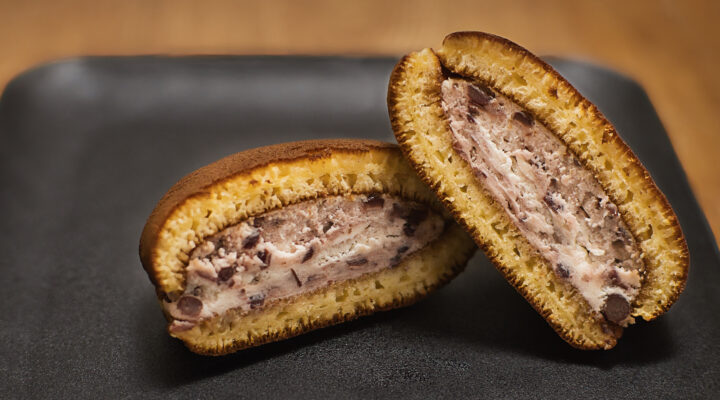
A dorayaki variation is not merely a matter of mixing a new flavor into the red bean paste. Rather, it is about redesigning the proportion, the sensory format, and the eating experience itself. The minimal, oil-free canvas of traditional dorayaki hides five distinct structural dimensions of design freedom. By manipulating these axes, you can elevate a humble street confection into an avant-garde plated dessert.
Dimension 1: Change the Filling (The Chemistry of Fusion)
The most common approach to variation is modifying the filling. However, in professional pastry design, you cannot simply insert heavy Western fats or volatile acids without adjusting the surrounding moisture chemistry.
When introducing high-fat dairy like mascarpone or acidic fruit compotes, you must synchronize the lipid melting point and the water activity (Aw) of the system. Unchecked water migration will either dissolve the delicate crumb structure or accelerate starch retrogradation (staling).
Note: For a detailed chemical analysis of Brix and pH micro-calibration for dairy and fruit fillings, please refer to our dedicated guide:
▶ Read: The Professional Guide to Dorayaki Filling Ideas: Mastering Flavor Architecture and Texture Design
Dimension 2: Change the Batter (The Skin as an Aroma Canvas)
Traditional dorayaki batter relies on a clean, classic wheat-sugar-egg baseline to create a rich, honey-golden skin. However, the skin itself can become an active part of your flavor architecture.
By precisely integrating dry botanical or roasted powders into your dry-ingredient stage, you can transform the oil-free griddle cake into an aromatic canvas. Consider these elite variations:
- Matcha & Roasted Tea (Hojicha): Incorporating micro-ground tea leaves introduces a subtle, alkaline bitterness that cuts through the sweetness of sweet bean paste.
- Black Sesame & Cocoa: Infusing toasted sesame paste or high-grade Dutch cocoa powder alters the lipid structure of the batter, creating a deeper, Earthier base note.
- Seasonal Botanicals: Infusing the batter with dehydrated, powdered cherry blossoms (Sakura), roasted soy flour (Kinako), or local dried herbs.
Because the skin is entirely fat-free, these aromatic compounds dissolve cleanly on the palate, releasing their top notes the exact moment the cake melts.
Dimension 3: Change the Size and Format (The Perception of the Portion)
Altering the physical dimensions of your dorayaki is not a decorative choice; it completely redefines the dessert’s operational role and portion perception in your menu program:
- Miniature Medallions (2cm / 1-inch): By griddling micro-disks, you create an elegant bite-size petit four (Mignardise) served alongside tea or espresso at the end of a long tasting menu.
- Standard Plated (6cm to 8cm): The ideal individual portion size designed to be eaten with a fork and knife, anchoring a structured, stand-alone dessert course.
- Large-Format Sharing Dessert (12cm+): A dramatic, theatrical dessert sliced table-side. This format alters the cake-baking physics, requiring a slower, lower-heat griddle curve to ensure the thick center cooks uniformly without drying out the edges.
As size changes, the ratio of the moist crumb to the Maillard-caramelized outer crust changes. A micro-dorayaki has a higher skin-to-filling ratio, requiring a softer, wetter filling to preserve the “Unified Melt.”
Dimension 4: Change the Way It Is Served (Plated Deconstruction & Service Formats)
The moment you transition from “handheld” to “plated,” the culinary meaning of the dish undergoes a total translation. You can present the same foundational physical elements in ways that elevate its luxurious context:
- The Plated Deconstruction (Open-Face): Instead of sandwhiching the filling, use a single, perfectly warm dorayaki disk as a structural base. Pipe a precise, sculptural spiral of adzuki mont-blanc cream, and accent it with fresh herbs, local berries, and a quenelle of light creme fraiche.
- The Temperature Contrast: Order-to-table service allows you to play with thermal shock. Serve a freshly griddled, warm, honey-scented cake topped with a frozen sphere of local sake-kasu gelato or toasted-rice sorbet. The heat of the cake rapidly softens the ice cream, creating a luxurious, self-saucing mouthfeel on the palate.
Dimension 5: Change the Relationship Between the Two Cakes (The Geometric Ratio)
The standard ratio of classical dorayaki is a uniform sandwich: Cake + Filling + Cake. But a professional pastry chef is a structural architect who can re-engineer these geometric proportions:
- Ultra-Thin & Velvety Core: Bake your griddle cakes to a crepe-like thinness, allowing the velvety, high-hydration filling to dominate the bite.
- The Mille-Feuille Style: Stack three or four paper-thin griddle disks vertically, layering them with micro-thin spreads of flavored adzuki confiture and white chocolate ganache to create a multi-tiered, architectural presentation.
By shifting the physical relationship between the cake and the filling, you change the chewing tempo, the moisture distribution, and the overall sensory sequence.
Conclusion: The Absolute Baseline for Infinite Variations
Every magnificent variation—whether a deconstructed plated masterpiece with warm sake gelato or an ultra-thin layered sesame cake—is only as good as its underlying baseline.
If your core wheat-egg-sugar cake is dry, rubbery, or structurally weak, your complex culinary variations will collapse into a confusing, unmarketable mess. To play a brilliant variation, you must first master the absolute, unchanging physical laws of the traditional canvas.
Your Technical Roadmap to Success
To safely design, test, and scale your signature dorayaki program with zero initial capital expenditure risk, follow our structured, four-step professional journey:
Step 1: Master the Core Physics (Online Master Course / Home Kitchen)
- Your Mission: Build raw muscle memory and master the “San-Do-Wari” (1:1:1) egg-sugar-flour hydration equation on a standard crepe pan in your own kitchen. Learn to pour perfect, identical circles without specialized tools.
Step 2: Map the Chemistry of Your Signature (Online Advanced Course / Desk Study)
- Your Mission: Study the molecular laws of sugar-water activity (Aw), starch retrogradation, and traditional sugar-steeping (Mitsuzuke). Pre-visualize and draft your restaurant’s unique seasonal flavor and format combinations.
Begin Your Foundation Online
Both Step 1 and Step 2 are fully integrated into our signature digital curriculum. To build your technical baseline and map out your flavor architecture before traveling, secure your access here:
▶ Enroll in The Dorayaki Professional Mastery Path Bundle
Step 3: Five-Sensory Calibration & VIP Sourcing (3-Day Tokyo Schooling)
- Your Mission: Bring your online theory and practiced physical skills to our live Shinjuku studio. Work face-to-face with Master Yoko Senoo to audit your griddle execution, calibrate your senses to the master’s “An-bai” (sensory balance), and brainstorm your custom plated variations. Once approved, Master Senoo will personally facilitate custom orders for professional copper griddles and traditional tools directly from Japanese artisans.
Step 4: Deploy and Scale (Your Own Commercial Kitchen)
- Your Mission: Deploy your custom-ordered professional copper plates in your own kitchen. Using your permanent Advanced digital library as a reference, train your staff to execute high-margin, consistent commercial plated service.
▶ View the Professional Mastery Programs and Enroll Now
Related Articles
Dorayaki Filling Ideas: Mastering Flavor Architecture and Texture Design
The Dorayaki Industry Outlook: A Pastry Chef’s Low-Risk Roadmap to Commercial Scaling