Cream is Changing Dorayaki—But Where is the Line? A Guide for Professional Pastry Chefs
Introduction: Cream is Changing Dorayaki—But What Exactly is Changing?
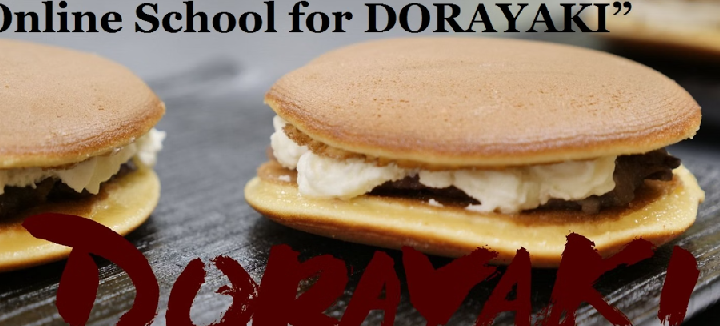
Walk into any modern Japanese confectionery shop today, and you will see a profound evolution. The display cases, once dominated by pristine, fat-free traditional sweets, are now sharing space with “Nama-Dorayaki”—creations featuring thick slates of cultured butter, whipped dairy creams, and flavored mousses interlocked with traditional sweet bean paste.
For a Western pastry chef looking to introduce dorayaki to a fine dining menu, this visual shift is incredibly exciting. It suggests that the boundaries of this centuries-old dessert are highly elastic. But as a professional, you must ask a deeper question: At what point does an alteration stop being an authentic dorayaki and simply become a western cake in disguise? Where is the identity line?
The Traditional Baseline: A Lipid-Free Canvas
To understand what changes when you introduce cream, you must first understand the physics of the traditional baseline.
Unlike Western cakes, which rely heavily on fats (butter, shortening, oil) to coat flour proteins, limit gluten, and trap air, the classical dorayaki shell is entirely fat-free. It is a pure, high-hydration sponge built on the San-Do-Wari (equal parts eggs, sugar, and flour) ratio. The delicate structure, moisture retention, and springy crumb are held together strictly by the organic hydrogen bonds of egg proteins and the intense hygroscopic nature of sugar and honey.
Similarly, traditional sweet bean paste (anko) is prepared strictly with legumes, water, and highly refined sugars. It is a clean, water-binding, completely lipid-free canvas. This complete absence of fats allows the earthy, nutty fragrance of the bean to land instantly on the palate, melting away cleanly without leaving any greasy residue.
Why the Anko-and-Cream Axis Works
Why has the combination of sweet bean paste with butter or cream taken Japan by storm? The answer lies in sensory science.
Western palate training is built on the interaction of lipids and sweetness. Fats carry flavor molecules and prolong their stay on the tongue, while dairy proteins soften the sharp edge of sucrose. When high-quality dairy—such as fermented butter, crème fraîche, or mascarpone—is introduced to anko, it bridges the gap between Western and Eastern taste expectations. The rich, lactic lipids wrap around the clean, sweet profile of the legumes, creating a rounded, comforting richness that feels immediately familiar to those trained in Western pastry.
The Boundary of Identity: The “Unified Melt”
However, introducing dairy is not as simple as slapping whipped cream between two pancakes. It presents a critical technical danger.
The fundamental identity of an authentic dorayaki does not lie in its shape, but in its eating experience—specifically, the “Unified Melt.” In a perfect classical dorayaki, the shell and the bean paste have matching moisture levels and density. When you take a bite, the cake and the filling dissolve on your tongue at the exact same tempo, vanishing together in a single, seamless moment.
Fats, by nature, do not dissolve in water. If you introduce a heavy, dense, or overly aerated cream filling, you disrupt this synchronization. The cake may dissolve instantly, leaving a greasy, unmelted ball of fat in the diner’s mouth. Or conversely, a high-water cream might migrate its moisture into the fat-free cake, making the shell soggy and causing the entire sandwich to fall apart on the plate.
A true culinary fusion is not a random combination of elements; it is an intentional, scientifically calculated transformation. To successfully integrate Western fats without destroying the Eastern identity of the sweet, you must design your dessert so that both cake and cream disappear from the palate simultaneously.
We Do Not Teach Cream—Because You Already Master It
At the Dorayaki Online School (DOS), our educational philosophy is built on absolute respect for your existing professional mastery.
We do not teach cream, butter, or alternative dairy formulations in our curriculum.
As a trained Western pastry chef or restaurateur, you do not need us to teach you how to whip cream, ferment butter, or emulsion cheeses. Your training in lipid chemistry, aeration, and dairy fat percentages is already world-class. You are already the master of that domain.
What we teach is the science you do need: the uncompromised physics of the traditional, fat-free baseline.
We teach you how to master the moisture kinetics of the San-Do-Wari batter, the precise thermodynamic control of the griddle surface, and the fluid dynamics required to bake a flawless, uniform, traditional shell in your own kitchen. By providing you with a scientifically perfect, reliable “classic canvas,” we give you the ultimate foundation. Once you fully command the traditional baseline, you can confidently apply your own world-class dairy and cream expertise to create a signature menu program that behaves predictably and melts beautifully.
Your Two-Step Path to Mastery
- Step 1: Master the Classic Physics Online: Begin with The Dorayaki Professional Mastery Path Bundle (online.dorayakis.com). Here, you will learn the fundamental water-binding rules, sugar-crystallization mechanics, and batter-viscosity controls to establish a highly consistent, fat-free baseline shell in your own workspace.
- Step 2: Calibrate and Confirm in Tokyo: Bring your physical griddle skills to our private 3-Day Tokyo Schooling (dorayakis.com). Under the direct, 1-on-1 audit of Master Yoko Senoo, we will verify your hand-and-heat mechanics to ensure you can execute the classic baseline flawlessly. Once your baseline is confirmed, we will help you finalize your restaurant’s specific, foundational recipe tailored to your local guest demographic.
Please note: Advanced beverage pairings, hyper-seasonal menu R&D, and the custom culinary integration of modern dairy or alternative fat systems exceed the operational scope of our 3-day practical schooling. These high-level, bespoke areas are exclusively handled post-schooling through our dedicated Individual Consulting Services under a separate contract (subject to individual project consultation and approval).
Deepen Your Technical R&D (Related Articles)
- Wagashi Taxonomy 101: Wagashi Taxonomy 101: Structurally Classifying Dorayaki in the Sweets Universe
- San-Do-Wari Baseline: Q. How Does Sugar Shape the Color and Aroma of Authentic Dorayaki?
- Takeout Freshness Science: Q. Dorayaki Packet: Why Freshness is the Ultimate Luxury for Your Grab-and-Go Dessert